
Benefits of Rosemary Extract for Hair Growth


Most men researching hair loss ingredients focus on the clinical-grade actives: Minoxidil, Finasteride, Redensyl, Procapil. Rosemary tends to get dismissed as a kitchen herb that somehow ended up in a serum label.
That assessment misses something important. Rosemary extract has peer-reviewed clinical evidence behind its hair growth claims, a mechanism that is biologically coherent, and a safety profile that makes it suitable for daily long-term use. For any man building a hair care routine, understanding what rosemary extract actually does is worth the five minutes.
What Is Rosemary Extract in Hair Products?
The rosemary used in hair care is Rosmarinus officinalis leaf extract - a standardised concentrate of active compounds from the rosemary plant. It is not the dried herb from a spice rack. The extract is processed to isolate and concentrate the bioactive molecules responsible for its circulatory, antioxidant, and anti-androgenic effects.
 Man Matters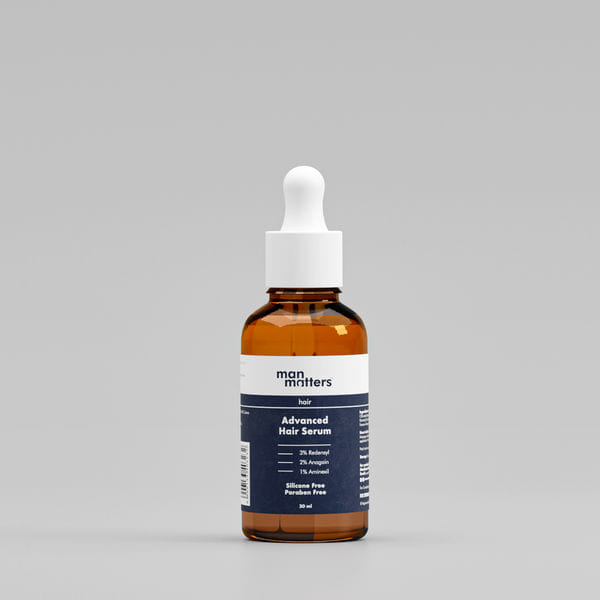
The key compounds:
- Rosmarinic acid - the primary active. A powerful antioxidant and anti-inflammatory agent that protects follicle cells from free radical damage
- Ursolic acid - inhibits 5-alpha reductase, the enzyme that converts testosterone into DHT at the scalp level
- Carnosic acid - stimulates nerve growth factor synthesis, which has been shown to promote hair follicle cell proliferation
- Caffeic acid - contributes antioxidant and anti-inflammatory action, reducing the chronic scalp inflammation that accelerates follicle ageing
Together these compounds create an ingredient that works on three levels simultaneously: DHT inhibition, circulation improvement, and oxidative protection.
How Rosemary Extract Compares to Minoxidil
The most significant piece of clinical evidence for rosemary extract comes from a 2015 randomised comparative trial published in Skinmed Journal. The study compared 2% rosemary oil directly against 2% Minoxidil in men with androgenetic alopecia over six months.
The result: both groups showed statistically comparable hair count improvements at the six-month mark. Rosemary was not inferior to Minoxidil 2% on the primary outcome measure of hair count increase.
One additional finding: the rosemary group reported significantly less scalp itching than the Minoxidil group - a meaningful quality-of-life difference for daily use.
What this study does not prove: rosemary equivalent to Minoxidil 5% (the standard clinical dose). The comparison was specifically against 2% Minoxidil. For men with Stage 3-4 hair loss where the clinical standard is Minoxidil 5%, rosemary extract is a complementary ingredient rather than a standalone replacement.
The DHT-Blocking Mechanism
Ursolic acid in rosemary extract inhibits 5-alpha reductase - specifically the Type II isoform, which is predominantly found in hair follicle tissue. By reducing 5-alpha reductase activity, rosemary extract lowers the conversion rate of testosterone to DHT at the scalp, reducing the hormonal pressure on susceptible follicles.
This mechanism is the same one targeted by Saw Palmetto, Procapil's Oleanolic Acid, and pharmaceutical Finasteride. Rosemary's inhibition is milder than Finasteride but comparable to Saw Palmetto in scope - making it a natural, daily-use DHT management layer.
How Rosemary Extract Improves Scalp Circulation
Rosemary extract improves peripheral blood circulation when applied topically - a well-documented effect of its camphor and rosmarinic acid content. At the scalp level, this means improved blood flow to the dermal papilla of each follicle.
Better circulation translates directly to better follicle function: more oxygen, more amino acids, and more micronutrients reaching the cells responsible for building hair during the anagen phase. Follicles that are well-supplied are less likely to shorten their growth phase prematurely.
This circulatory benefit is separate from Minoxidil's vasodilation mechanism - rosemary works through neural and vascular signalling pathways rather than direct vessel dilation. The two can therefore be used together without redundancy.
Antioxidant Protection for Follicle Longevity
Oxidative stress - the accumulation of free radicals that damage cellular structures - is a significant contributor to follicle ageing and premature miniaturisation. Scalp tissue is particularly exposed to UV radiation, air pollution, and sebum oxidation, all of which generate free radicals.
Rosmarinic acid and carnosic acid in rosemary extract neutralise these free radicals at the follicle level. This reduces the cellular damage that shortens the anagen phase over time, protecting follicle integrity across long-term use.
This antioxidant mechanism is also why rosemary pairs particularly well with Baicapil - which provides similar oxidative protection via Chinese skullcap root extract - in multi-active hair serums.
What to Look for When Choosing a Rosemary Extract Product
Not all rosemary extract in hair products is the same. Processing method and concentration affect bioavailability.
When choosing a product with rosemary extract, check for:
- Rosemary listed as Rosmarinus officinalis leaf extract on the INCI list
- Combined with DHT-blocking actives like Procapil or Saw Palmetto for comprehensive hormonal coverage
- Leave-in serum format for maximum scalp contact time
- Sulphate-free and paraben-free formulation
- Clinically tested claim from the brand on the overall formulation
Rosemary Extract in Man Matters Advanced Hair Serum
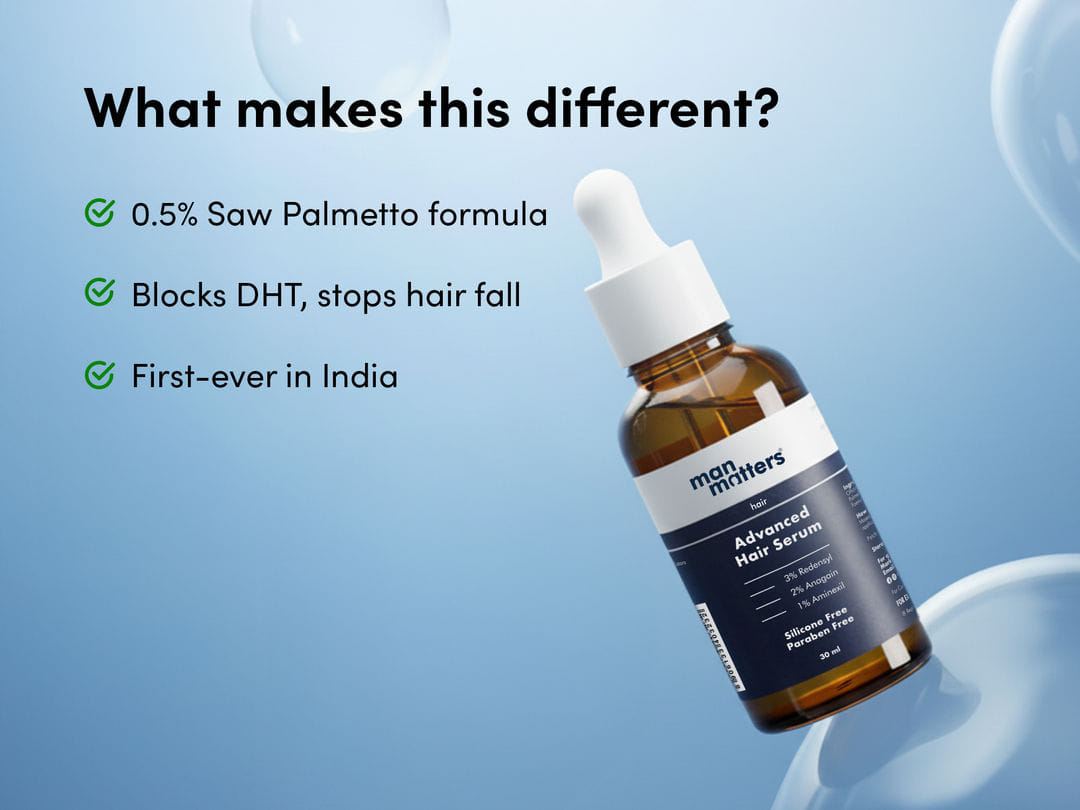
Man Matters Advanced Hair Serum contains Rosmarinus Officinalis (Rosemary) Leaf Extract as part of its multi-active formula alongside 3% Procapil, 3% Redensyl, 2% Anagain, Aminexil, Baicapil, Saw Palmetto, and Fenugreek Seed Extract.
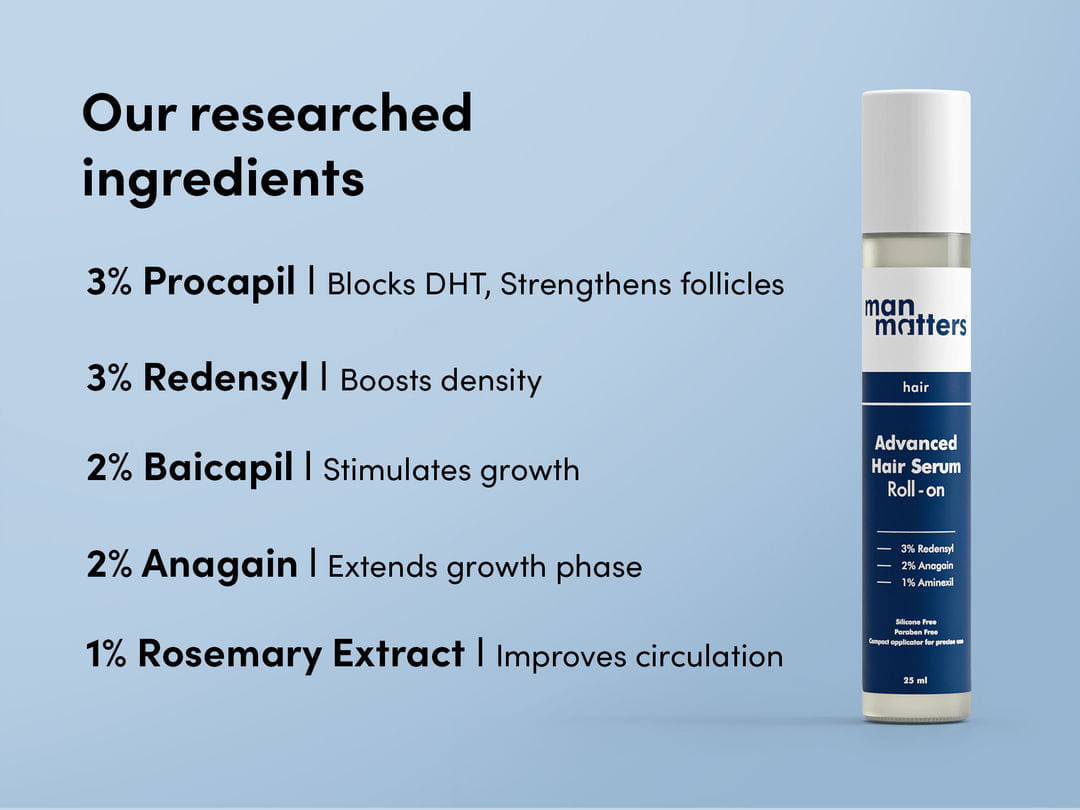
Within this stack, rosemary contributes DHT inhibition via Ursolic acid, scalp circulation improvement via rosmarinic acid, and antioxidant protection - complementing the targeted follicle-level actions of Procapil and Redensyl without overlapping their mechanisms.
Man Matters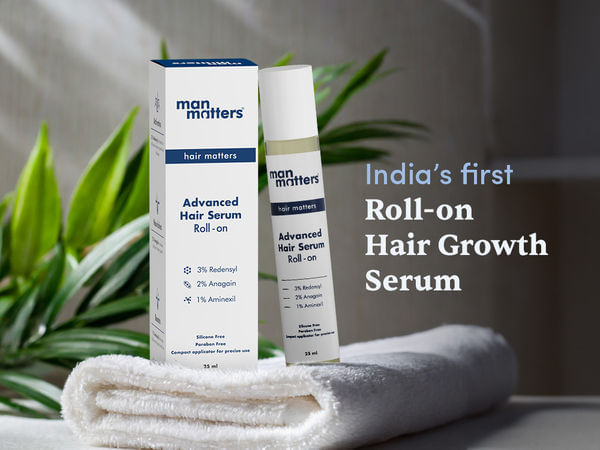
The serum is non-sticky, fast-absorbing, paraben-free, and clinically tested to reduce hair thinning. Apply twice daily directly to the scalp and leave on. Visible results are expected within 3 months of consistent use.
FAQ
Q: Is rosemary extract better than rosemary essential oil for hair?
They differ in concentration and safety profile. Pure rosemary essential oil must be diluted before scalp application - undiluted essential oils cause irritation. Rosemary extract in a hair serum is formulated at a safe, stable concentration and does not require dilution. Serum format also delivers better bioavailability to follicles than DIY oil mixing.
Q: How long does rosemary extract take to show results?
A: The six-month comparative study showed statistically significant hair count improvements at that timeframe. In a multi-active serum formula alongside Procapil and Redensyl, users typically see reduced shedding at 6-8 weeks and density improvement at 3 months with consistent twice-daily use.
Q: Can rosemary extract be used alongside Minoxidil?
A: Yes. Their mechanisms do not overlap - rosemary works via DHT inhibition and circulation enhancement; Minoxidil via vasodilation. Using both provides complementary coverage and is well-tolerated. Many men on Minoxidil also use a rosemary-containing serum as a daily maintenance layer.
Q: Is rosemary extract safe for daily long-term use?
A: Yes. Rosemary extract has an excellent cosmetic safety profile with no documented systemic effects at standard topical concentrations. It is one of the safest hair growth actives available for indefinite daily use.
Q: Does rosemary extract work for all types of hair loss?
A: It is most effective for androgenetic alopecia where DHT sensitivity and scalp circulation are relevant factors. For stress-related or nutritional hair loss, addressing those root causes is the primary priority, though rosemary's antioxidant and circulatory benefits are broadly useful.
Q: Can rosemary extract replace Finasteride?
A: No. Finasteride is a pharmaceutical with systemic DHT reduction of 60-70% and decades of clinical evidence. Rosemary's DHT inhibition is topical and milder. For early-stage hair loss, rosemary as part of a multi-active serum is a strong non-prescription option. For moderate-to-advanced androgenetic alopecia, it works best as a complement to, not a replacement for, pharmacological treatment.