
Is Man Matters Good for Hair? Ingredients, Science & What 5 Months Actually Looks Like

You’ve seen the ads. You’ve probably Googled it twice already. Now you want a straight answer: does Man Matters actually work for hair loss, or is it just good marketing?
Fair question. Here’s how we’re going to answer it.
We’ll start with the science behind hair loss itself - because if you don’t understand why your hair is falling, you can’t evaluate whether any treatment will fix it.
Then we’ll break down exactly what’s in the Man Matters kit, what the clinical research says about each ingredient, and what real users experience month by month.
No fluff. No “results may vary” hand-waving. Let’s get into it.
Ready to find out what’s causing your hair loss?
Take the free 3-minute hair assessment. Get a dermatologist-reviewed diagnosis and a treatment plan built for your specific condition. No payment required.
[Take the Free Hair Assessment]
The Short Answer (For the Impatient)
Yes, Man Matters works for most men with early-to-moderate hair loss who follow the full protocol for at least 4–5 months.
It works because the core ingredients - Minoxidil, Finasteride, and targeted supplements - have decades of clinical evidence behind them. What Man Matters adds is the diagnosis, customization, and medical oversight that turns those ingredients into a coordinated treatment plan.
It does not work overnight. It does not regrow hair on completely bald scalps. And it requires consistency - skip your routine regularly and results won’t come.
Now, if you want the full picture - the science, the timelines, the honest limitations - keep reading.
Why Hair Falls Out in the First Place
Before evaluating any treatment, you need to understand what’s causing the problem. Hair loss isn’t one condition - it’s a symptom with multiple possible drivers.
DHT and Genetics
The most common cause of hair loss in Indian men is androgenetic alopecia - male pattern baldness. It’s driven by a hormone called DHT (dihydrotestosterone).
Here’s how it works: your body converts testosterone into DHT via an enzyme called 5-alpha reductase. DHT then binds to receptors in your hair follicles and gradually shrinks them. Over time, the follicle produces thinner, shorter, weaker hair - until it stops producing visible hair entirely.
This process is called follicular miniaturization, and it’s why hair loss is progressive. It doesn’t happen overnight. It happens strand by strand, month by month, until the thinning is impossible to ignore.
Genetics determines how sensitive your follicles are to DHT. If your father or maternal grandfather experienced pattern baldness, your risk is significantly higher. But genetics loads the gun - lifestyle, stress, and nutrition pull the trigger.
Stress, Sleep and Nutrition
Chronic stress pushes hair follicles into the telogen (resting) phase prematurely. This is called telogen effluvium - and it’s why men under heavy work pressure, poor sleep, or emotional strain often notice sudden, diffuse hair fall.
Nutritional deficiencies compound the problem. Low iron, zinc, vitamin D, and B12 are directly linked to increased hair shedding. Your follicles need raw materials to build hair. If those materials aren’t in your bloodstream, no topical product can compensate.
Scalp Health
Dandruff, seborrheic dermatitis, fungal overgrowth, excess sebum - all of these create an inflamed, hostile environment on your scalp.
Inflamed follicles don’t grow hair well. Think of it as trying to grow a plant in polluted soil. You can water it all you want - if the soil is toxic, the plant struggles.
Most men dealing with hair loss have at least two of these factors happening simultaneously. That’s why single-product solutions rarely work. The problem is multi-layered, so the treatment needs to be too.
How Man Matters Treats Hair Loss - The Full Breakdown
Man Matters doesn’t hand you a single bottle and hope for the best. The treatment is built as a system - each component targets a different pathway contributing to your hair loss.
Minoxidil - The Growth Engine
What it does: Increases blood flow to the follicle and extends the anagen (active growth) phase of the hair cycle. Miniaturized follicles start producing thicker, longer strands again.
The evidence: FDA-approved since 1988. A 2020 meta-analysis in the Journal of the American Academy of Dermatology confirmed significant hair count increases with 5% Minoxidil vs. placebo.
What most people get wrong: They quit during the shedding phase (weeks 2–6) when hair fall temporarily increases. That shedding is the treatment working - pushing weak hairs out to make room for stronger growth. Quitting here means you endured the worst part and missed the payoff.
Finasteride - The DHT Shield
What it does: Blocks the enzyme (5-alpha reductase) that converts testosterone into DHT. Less DHT means less follicular miniaturization. It addresses the hormonal root cause of pattern baldness, not just the symptoms.
The evidence: A 5-year study in the European Journal of Dermatology showed 90% of men on Finasteride maintained or increased hair count. The placebo group continued losing hair throughout.
Important: Not prescribed to everyone. Man Matters’ dermatologist evaluates your case before including it. Side effects (2–4% incidence: reduced libido, mood changes) are discussed upfront. You’re never pressured into it.
Nutritional Support - Fixing What’s Broken Inside
What it does: Supplements targeted at the specific deficiencies contributing to your hair loss. Biotin, zinc, iron, vitamin D, B-complex - based on what your assessment reveals.
Why it matters: Topical Minoxidil stimulates the follicle externally. But if your body doesn’t have the raw materials (proteins, minerals, vitamins) to build hair, that stimulation has less to work with. Supplementation fills the gap from the inside.
Scalp Care - The Foundation Nobody Talks About
What it does: Ketoconazole-based shampoo for dandruff, fungal overgrowth, or DHT buildup on the scalp. Gentle cleansers for those without scalp conditions.
Why it matters: A 2019 study in the Indian Journal of Dermatology found that Ketoconazole used alongside Minoxidil improved hair density more than Minoxidil alone. Clean, healthy scalp = better absorption = better results.
This multi-layered approach is what separates a treatment plan from a product purchase. Each layer targets a different contributor to your hair loss. Remove one layer and the results drop.
Ready to find out what’s causing your hair loss?
Take the free 3-minute hair assessment. Get a dermatologist-reviewed diagnosis and a treatment plan built for your specific condition. No payment required.
[Take the Free Hair Assessment]
What Does the Science Say? Clinical Evidence Behind the Ingredients
Every ingredient in the Man Matters kit has peer-reviewed clinical evidence. Here’s a quick summary of the key studies:
|
Ingredient |
Key Clinical
Evidence |
|
Minoxidil 5% |
2020 JAAD meta-analysis: significant increase in hair count
vs. placebo across multiple RCTs. FDA-approved since 1988. |
|
Finasteride 1mg |
5-year European Journal of Dermatology study: 90% of men
maintained or increased hair count. Placebo group declined. |
|
Microneedling + Minoxidil |
2013 Int. Journal of Trichology: combination produced
significantly higher hair counts than Minoxidil alone over 12 weeks. |
|
Ketoconazole Shampoo |
2019 Indian Journal of Dermatology: Ketoconazole + Minoxidil
improved density beyond Minoxidil alone. |
|
Biotin (in deficient patients) |
2017 Skin Appendage Disorders review: supplementation improved
hair growth in patients with documented biotin deficiency. |
Note: Biotin supplements help when there’s an actual deficiency. If your biotin levels are normal, additional supplementation won’t produce dramatic results. This is why the diagnosis step matters - it identifies what you’re actually deficient in.
Real User Experiences - The Honest
What Users Love
The diagnosis changed everything. Easily the most repeated positive theme. Users say the free assessment was the first time anyone actually explained why they were losing hair - not just sold them a product.
Arjun K. (verified, 7 months on plan) put it simply: he’d been using rosemary oil, biotin gummies, and two different shampoos for a year. Nothing worked. The Man Matters assessment revealed his primary issue was DHT sensitivity combined with low iron - neither of which his previous products addressed.
Visible change by month 4. Users who complete the full 5-month protocol consistently report reduced shedding by month 2–3 and visible baby hairs or density improvement by month 4–5.
Prateek S. (verified, 5 months) shared that his barber noticed the difference before he did. Thinning at the crown that had been worsening for two years started filling in by month four. He credits the Minoxidil + Finasteride combination his dermatologist prescribed.
Someone is actually watching. The hair coach follow-ups and dermatologist reviews make users feel like they’re on a treatment plan, not just buying a subscription box.
Nikhil D. (verified, 6 months) said the coaching call at week 3 - right when shedding peaked and he was ready to quit - was the reason he stayed.
His coach explained the shedding phase, showed him other users’ timelines, and convinced him to push through. By month 5, his hair fall had dropped by roughly 80%.
Also read:
 Dr. Bothra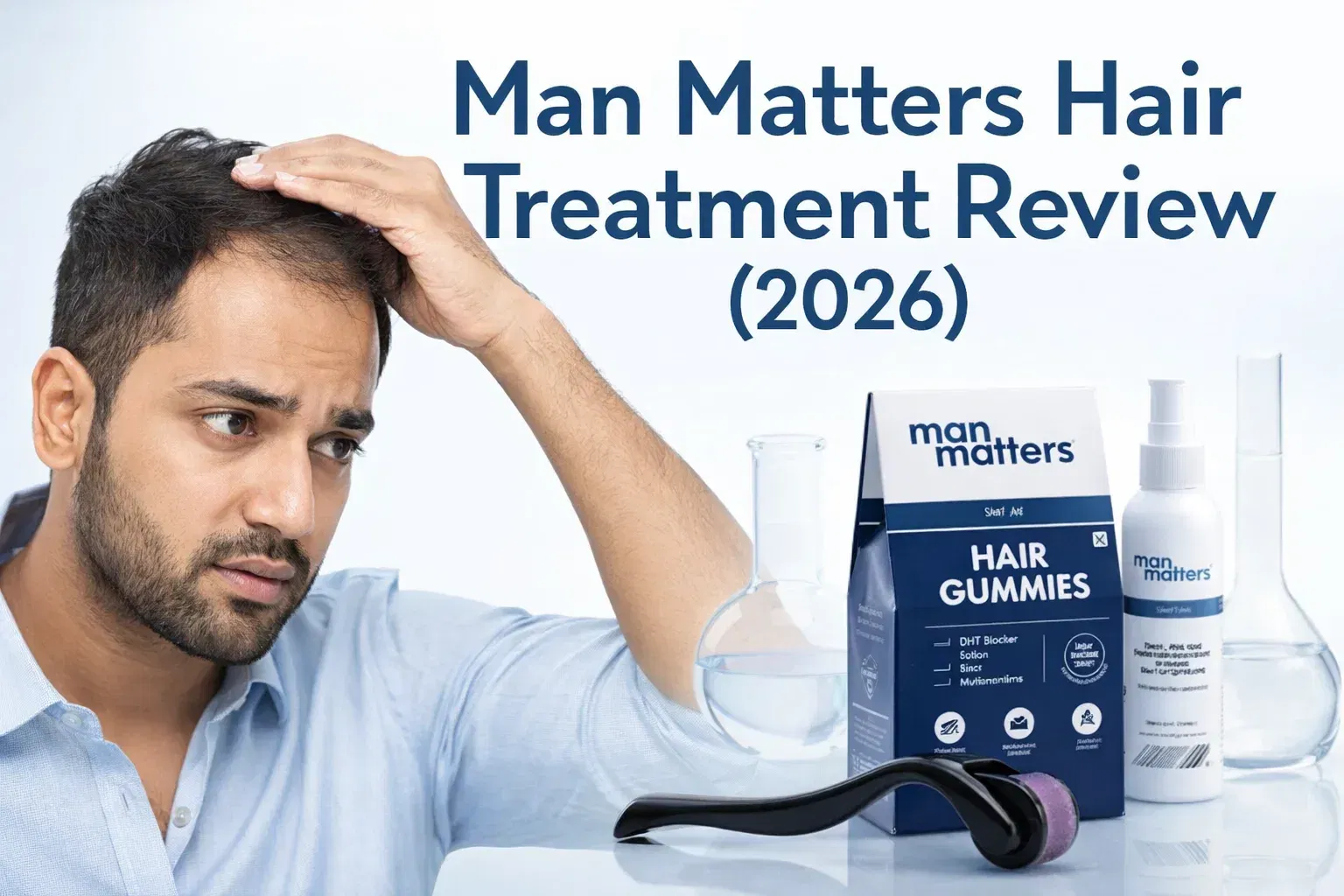
Common Questions From Users
Isn’t this just Minoxidil?
It’s partially true: the molecule is the same. What the markup covers is the diagnosis, customization, medical oversight, and supplementation. Whether that’s worth it depends on whether you want to self-manage or be guided.
I didn’t see results in one month.
Clinically, that’s expected. Hair has a 3–6 month growth cycle. No legitimate treatment shows density changes in four weeks. This is a realistic-expectations problem, not a product problem.
The shedding scared me.
Valid. The initial shedding phase is alarming if you’re not prepared. This is why Man Matters explains the shedding phase clearly during the consultation..
Coaching Call before products arrive.
Some users felt their hair coach was pushing upgrades rather than genuinely supporting them. We’re working on retraining this - the coach should feel like a guide, not a salesperson.
Month-by-Month: What 5 Months on Man Matters Actually Looks Like
Month 1: The hard part.
You start the regimen. Daily Minoxidil application, supplements, shampoo routine. Around week 2–3, the shedding phase begins. You’ll see more hair on your pillow, in the shower, on your comb.
This is normal. This is the treatment working. Your dermatologist and hair coach will both confirm this. Don’t quit here. The majority of users who “fail” on Minoxidil quit during this phase and never see what was coming next.
Month 2: The quiet month.
Shedding tapers off. Daily hair fall drops noticeably - fewer strands on your pillow, less hair in the drain. You won’t see new growth yet. The follicles are rebuilding internally, cycling from telogen back into anagen.
This is the month that tests your patience. Nothing dramatic happens. Trust the biology and keep applying consistently.
Month 3: First signs.
Most users notice their daily hair fall has dropped significantly compared to month one. Some start seeing fine, light baby hairs along the hairline or in thinning zones.
These baby hairs are new growth entering the anagen phase. They look wispy and light at first. Over the next 2–3 months, they’ll thicken and darken into normal terminal hairs.
Month 4: Visible progress.
Baby hairs are getting thicker and more numerous. Thinning areas look noticeably denser. Your part line may look narrower. This is when you can start comparing photos from month one and seeing a real difference.
This is also when your dermatologist may review your progress photos and make protocol adjustments - increasing Minoxidil concentration, adding or removing supplements, or fine-tuning the routine.
Month 5: The payoff.
Significant improvement in density and coverage for most users. Hair feels stronger, thicker, more resilient. Other people may start commenting on the change.
At this point, many users transition from an aggressive regrowth protocol to a lighter maintenance plan - reducing cost and effort while preserving results. Your dermatologist guides this transition.
Important: This timeline is based on internal data from users who followed the prescribed protocol consistently. If you skip days regularly, eat poorly, sleep badly, or quit during shedding - this timeline does not apply to you. Consistency is non-negotiable.
Ready to find out what’s causing your hair loss?
Take the free 3-minute hair assessment. Get a dermatologist-reviewed diagnosis and a treatment plan built for your specific condition. No payment required.
[Take the Free Hair Assessment]
Man Matters vs. Going the DIY Route
Let’s be honest about the alternative most men consider: buying Minoxidil and Biotin from a pharmacy themselves.
The DIY route works if:
You know your exact type of hair loss. You’ve confirmed it’s DHT-driven and not nutritional, stress-related, or scalp-based. You’re disciplined enough to apply Minoxidil daily for 6+ months without anyone checking in. And you’re comfortable that you’re taking the right products at the right dose for your stage.
The DIY route often fails because:
Most men guess wrong about their hair loss type. They buy Minoxidil for a problem that’s actually iron deficiency. Or they skip the scalp care that’s blocking absorption. Or they quit at the shedding phase because nobody told them it was coming.
Man Matters fills the gap between “self-medicate with pharmacy products” and “visit a dermatologist every month at ₹2,000+ per sitting.” It’s medical-grade treatment with convenience and cost efficiency.
If you’re the kind of person who researches thoroughly, self-diagnoses accurately, and sticks to routines without external accountability - you might not need this. For everyone else, the structure and guidance is what makes the difference.
How to Use Man Matters Correctly (Most People Get This Wrong)
Apply Minoxidil on a dry scalp.
Not damp, not wet. Dry. Moisture dilutes the solution and reduces absorption. Apply after your hair is fully dry, ideally at night before bed.
Don’t wash it off for at least 4 hours.
Minoxidil needs time to absorb. If you apply it and shower two hours later, you’ve wasted most of the dose.
Take supplements with food.
Biotin and mineral supplements absorb better with a meal. They can also cause mild stomach discomfort on an empty stomach.
Use the scalp shampoo as prescribed.
Ketoconazole shampoo isn’t for daily use - typically 2–3 times per week. Overusing it can dry out your scalp. Underusing it lets fungal buildup return.
Don’t double up on missed doses.
If you skip a day of Minoxidil, just resume the next day. Applying double doesn’t compensate - it increases the risk of scalp irritation.
Be patient through month 1–2.
The hardest part of any hair treatment is the window between starting and seeing results. Your dermatologist and hair coach are there for this exact phase. Use them.
Who Gets the Best Results - And Who Doesn’t
Best results:
Men at Norwood Stage 1–3 (early thinning, receding temples, mild crown loss). The earlier you start, the more follicles are still alive and responsive to treatment. Starting at the first signs of thinning gives you the best shot at full recovery.
Good results with realistic expectations:
Men at Norwood Stage 3–4 (moderate recession, visible crown thinning). Treatment can slow progression significantly and regrow hair in thinning zones. Full density restoration is less likely, but meaningful improvement is common.
Limited results:
Factors that influence outcomes: consistency (daily application without skipping), diet quality (nutritional deficiencies undermine treatment), stress management (chronic stress keeps follicles in telogen), and sleep (growth hormone release peaks during deep sleep - your hair literally grows while you rest).
Frequently Asked Questions
Is Man Matters a permanent solution for hair loss?
Male pattern baldness is a chronic condition. Man Matters manages it effectively, but if you stop treatment entirely, hair loss will likely resume over several months. Most men transition to a lighter maintenance protocol after the initial 5–6 month treatment phase.
Can Man Matters regrow hair on a completely bald scalp?
If follicles have been dormant for years and fully miniaturized, topical and oral treatments have very limited ability to reactivate them.
Is Finasteride dangerous?
Side effects occur in 2–4% of users (reduced libido, mood changes) and are typically reversible when the medication is stopped. Man Matters only prescribes Finasteride after a dermatologist evaluates your case. If you have concerns, alternatives are discussed before you start.
Why is Man Matters more expensive than pharmacy Minoxidil?
You’re not just buying Minoxidil. The price includes: dermatologist diagnosis, customized multi-product protocol, ongoing medical oversight, nutritional supplements, scalp care, and hair coach support. Pharmacy Minoxidil gives you one product. Man Matters gives you a managed treatment system.
Does the initial shedding mean the treatment isn’t working?
The opposite. Shedding in weeks 2–6 is a clinically expected sign that Minoxidil is cycling your follicles. Weak hairs are pushed out so stronger ones can grow. It’s temporary and resolves within 4–8 weeks.
Can women use Man Matters hair treatment?
The current Man Matters hair treatment kits are formulated specifically for male pattern hair loss. Women have different hormonal profiles and hair loss patterns. We recommend women consult a dermatologist who specializes in female hair loss for an appropriate treatment plan or choose women centric brands like Be Bodywise.
What if it doesn’t work for me?
Results vary depending on stage of hair loss, consistency, and underlying health conditions.
If you don’t see improvement after 5 months of consistent use, your dermatologist will reassess your diagnosis and discuss next steps - including whether a different approach is needed.
Ready to find out what’s causing your hair loss?
Take the free 3-minute hair assessment. Get a dermatologist-reviewed diagnosis and a treatment plan built for your specific condition. No payment required.
[Take the Free Hair Assessment]
Disclaimer: Published by Man Matters. Medical claims based on published peer-reviewed research and internal user data where noted. Individual results vary. Not a substitute for professional medical advice. Medically reviewed by Dr. Santosh Nagare.