
What Does Caffeine Do for Your Scalp and Hair?
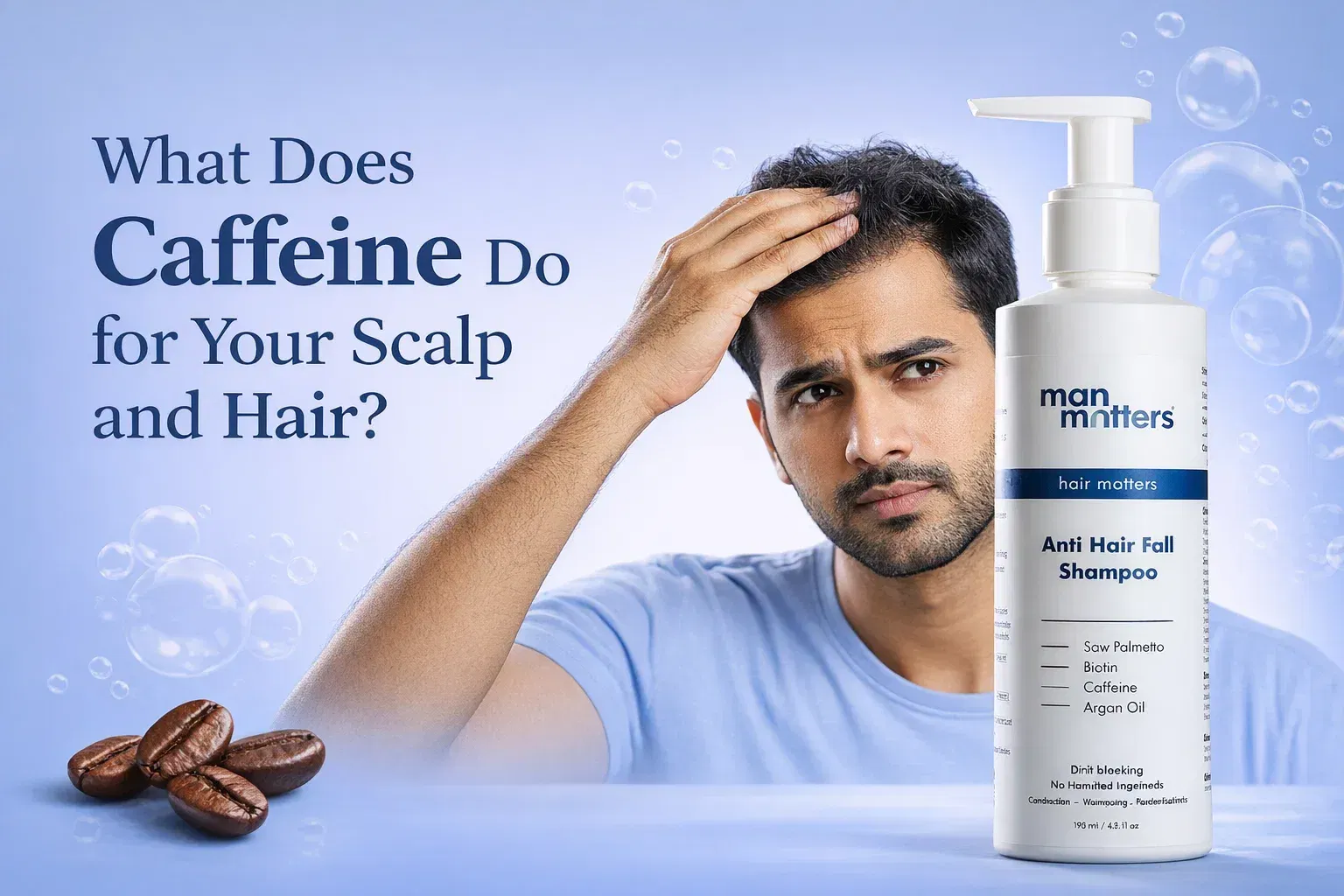
You already know what caffeine does for your brain in the morning. But if you've come across it in a hair shampoo and assumed it was a gimmick, you'd be wrong. Caffeine has genuine, peer-reviewed science behind its effects on hair follicles - and it works through a mechanism that's more specific and more relevant to male hair loss than most people expect.
Here's what the research actually says and why caffeine has earned its place in evidence-backed hair care.
What Makes Caffeine Relevant to Hair Loss?
The connection between caffeine and hair starts with one molecule: DHT (dihydrotestosterone).
 Man Matters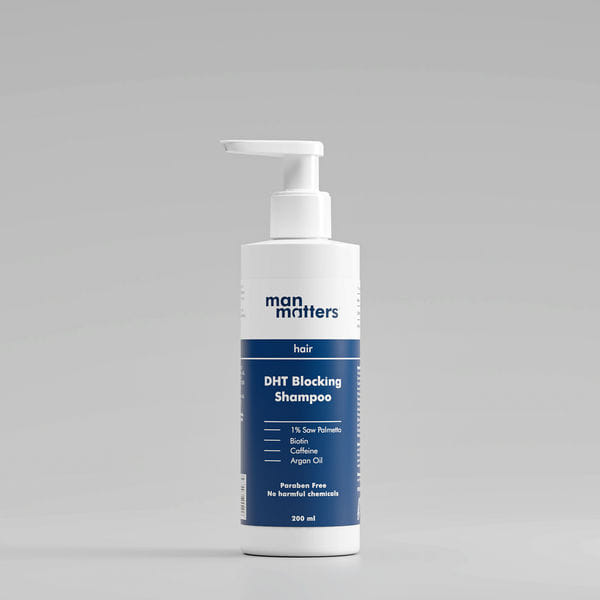
DHT is the hormone responsible for male pattern hair loss. It's derived from testosterone via an enzyme called 5-alpha reductase. In genetically susceptible men, DHT shrinks hair follicles progressively - shortening the growth phase, miniaturising the follicle, and eventually shutting it down.
Caffeine interferes with this process via two distinct mechanisms:
- Inhibition of 5-alpha reductase - Caffeine has been shown to reduce the activity of the enzyme that produces DHT at the scalp level. Less enzyme activity means less local DHT, meaning less hormonal pressure on follicles.
- Stimulation of hair follicle cell proliferation via cAMP - Caffeine inhibits an enzyme called phosphodiesterase, which normally breaks down cyclic AMP (cAMP) inside follicle cells. Higher cAMP levels stimulate follicle cell growth and extend the anagen (active growth) phase. This is the same downstream mechanism that Minoxidil exploits - though via a different route.
The Key Research on Caffeine and Hair
The most frequently cited study on topical caffeine and hair was published in the International Journal of Dermatology. It compared a caffeine-based topical liquid to a 5% Minoxidil solution in men with androgenetic alopecia. The conclusion: the caffeine-based topical was not inferior to Minoxidil 5% in its effects on hair growth parameters - a significant result for a non-pharmacological ingredient.
A second well-known study demonstrated that caffeine could penetrate the hair follicle from a shampoo within just 2 minutes of application - enough contact time for the active to reach the follicle even during a wash. This answered the practical question of whether leave-in application was necessary for caffeine to be effective (the short answer: it isn't, for caffeine specifically).
That said, leave-in formats still deliver greater sustained exposure, and caffeine in a shampoo provides its most meaningful benefit when left on the scalp for 2–3 minutes before rinsing.
Caffeine as a DHT Blocker: How Strong Is the Effect?
It's worth being precise here. Caffeine is a mild topical DHT inhibitor. Its effect on 5-alpha reductase is real but not as potent as pharmaceutical DHT blockers like Finasteride (oral) or as concentrated as Saw Palmetto extracts in a dedicated serum.
Where caffeine shines as a DHT blocker is in its delivery format: it's extremely well-tolerated, has no systemic hormonal effects, and can be applied daily in a shampoo without any of the concerns associated with oral DHT blockers.
Think of caffeine's DHT-blocking role as an accessible daily layer of hormonal protection - one that works in the background every wash day without requiring additional steps in your routine.
Can Caffeine Actually Penetrate the Scalp?
Yes - and this is important, because it determines whether a caffeine shampoo is doing anything meaningful.
Research has confirmed that caffeine penetrates hair follicles effectively in both shampoo and serum delivery formats. Because caffeine is a small, lipophilic molecule, it passes through the follicle's outer root sheath relatively easily. Studies measuring caffeine concentration in follicle tissue have confirmed active levels after just 2 minutes of shampoo contact.
This is why leaving a caffeine shampoo on for 2–3 minutes before rinsing matters. Rushing through the wash reduces the contact time and the amount of active that reaches the follicle.
How Caffeine Works Differently From Serum Actives
Unlike Procapil, Redensyl, or Aminexil - which are leave-in actives that need hours of scalp contact - caffeine is unique in being a wash-off active that still delivers meaningful follicle exposure.
This means caffeine's role in a hair care routine is as a daily maintenance and DHT-blocking layer during the cleanse step, while serums handle the deeper, sustained treatment work. They are not competing - they are complementary, covering different parts of the same problem at different points in the routine.
What to Look for in a Caffeine Hair Product
When choosing a caffeine-containing hair product, check for:
- Caffeine clearly listed as a primary active, not buried at the bottom of a long ingredient list
- Leave-on time guidance on the label - 2–3 minutes minimum for shampoos
- DHT-blocking combination ingredients like Saw Palmetto or Biotin for multi-mechanism coverage
- Sulphate-free, SLS-free formulation - sulphates strip the scalp barrier caffeine is trying to protect
- Paraben-free formula
- Clinically tested claim from the brand, not just an ingredient listing
Man Matters DHT Blocking Shampoo and Caffeine
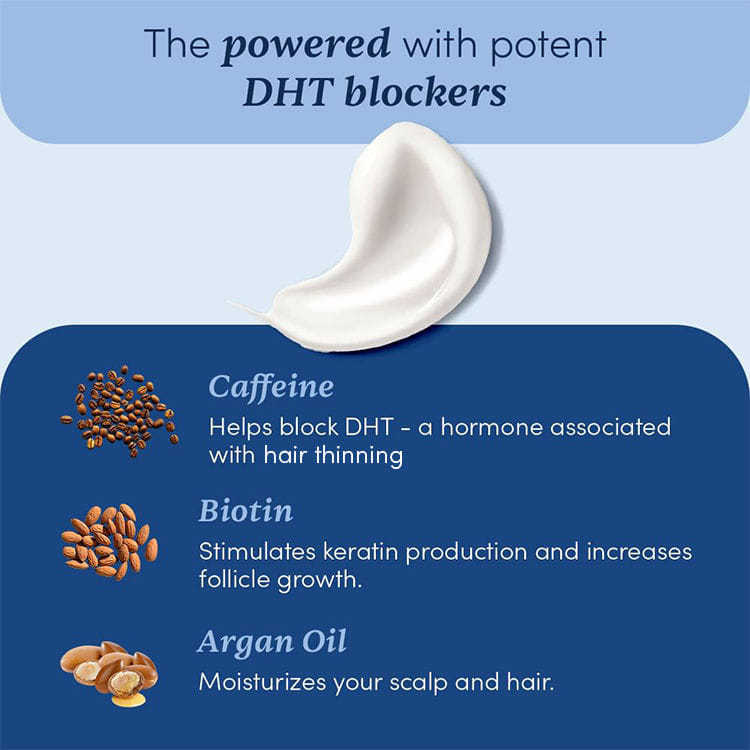
Man Matters DHT Blocking Shampoo is a 2-in-1 formula powered by caffeine, Biotin, and Argan Oil. Caffeine works as the primary DHT-blocking active - inhibiting the enzyme that converts testosterone into DHT at the scalp level. Biotin supports keratin structure and follicle metabolism. Argan Oil seals moisture into the hair shaft, protecting strands from dryness and breakage.
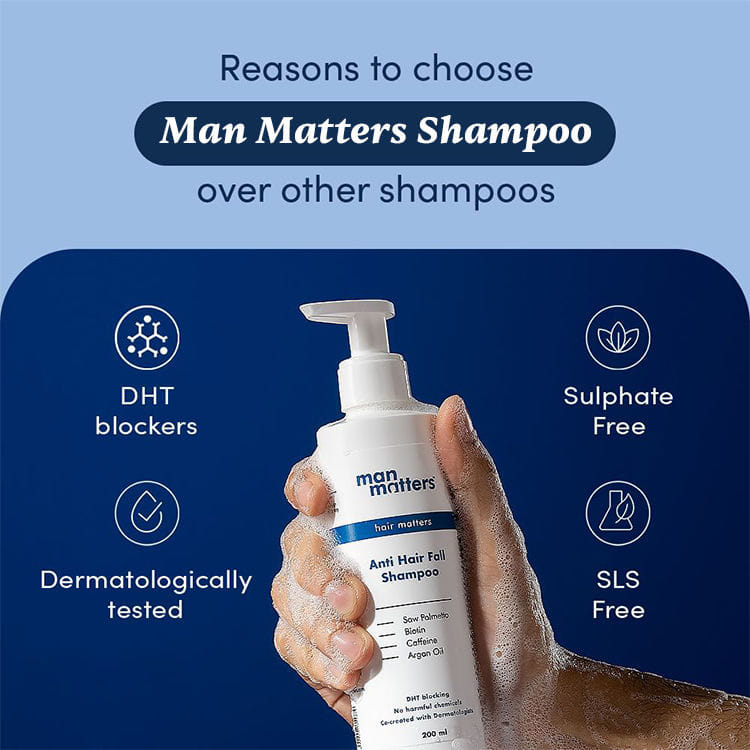
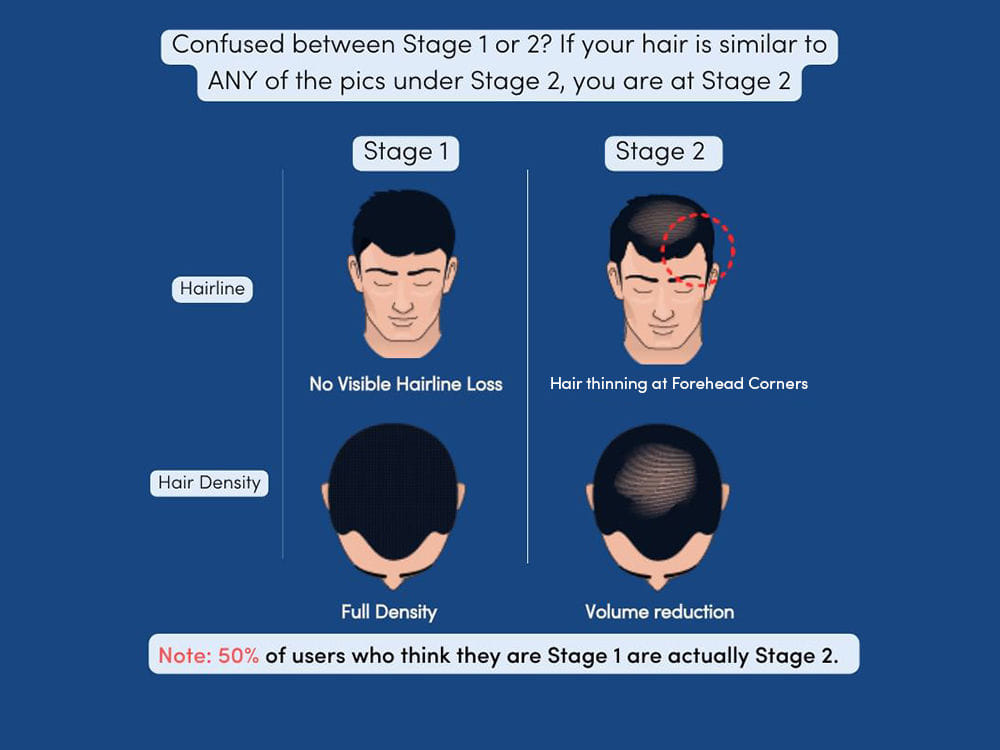
Man MattersThe shampoo is sulphate-free, SLS-free, paraben-free, and free from harmful chemicals. It's designed for men at Stage 1 through Stage 3 of hair loss and is recommended to be left on the scalp for 2–3 minutes before rinsing. With consistent use over 3 months, the formulation is designed to reduce and prevent hair thinning.
The shampoo is available in 200ml and 300ml formats.
FAQ
Does caffeine shampoo really work for hair loss?
Yes, within its scope. Caffeine is a mild topical DHT inhibitor and follicle cell stimulant with peer-reviewed evidence behind it. It's not a replacement for clinical-grade treatments in advanced hair loss, but it delivers meaningful daily scalp benefit when used consistently.
How long should I leave caffeine shampoo on?
Research shows caffeine penetrates follicles within 2 minutes of scalp contact. Leaving the shampoo on for 2–3 minutes before rinsing ensures adequate follicle exposure. Washing it off immediately reduces efficacy.
Can caffeine shampoo replace Minoxidil?
No. One study found caffeine topical non-inferior to Minoxidil 3%, but Minoxidil 5% - the standard clinical dose - remains more potent. Caffeine is best used as a daily maintenance layer, not as the sole treatment for moderate-to-advanced androgenetic alopecia.
Is caffeine safe for daily scalp application?
Yes. Topical caffeine has an excellent safety profile. Unlike oral caffeine, topical use does not raise systemic levels to any meaningful degree. No scalp irritation has been reported at standard cosmetic concentrations.
Does caffeine work on all types of hair loss?
It's most effective for androgenetic alopecia (DHT-driven male pattern hair loss), where its DHT-inhibiting mechanism is directly relevant. For stress-related or nutritional hair loss, other interventions should be the primary focus.
Should I use a caffeine shampoo every day?
Yes. Daily use ensures regular DHT inhibition at the scalp level. Man Matters DHT Blocking Shampoo is designed for consistent daily use.
Is caffeine in shampoo absorbed into the body?
Topical caffeine absorption is minimal and does not produce the systemic stimulant effects associated with drinking coffee. Studies confirm follicle-level penetration without meaningful systemic uptake.