
Does Finasteride Regrow Hair? What the Clinical Data Actually Shows

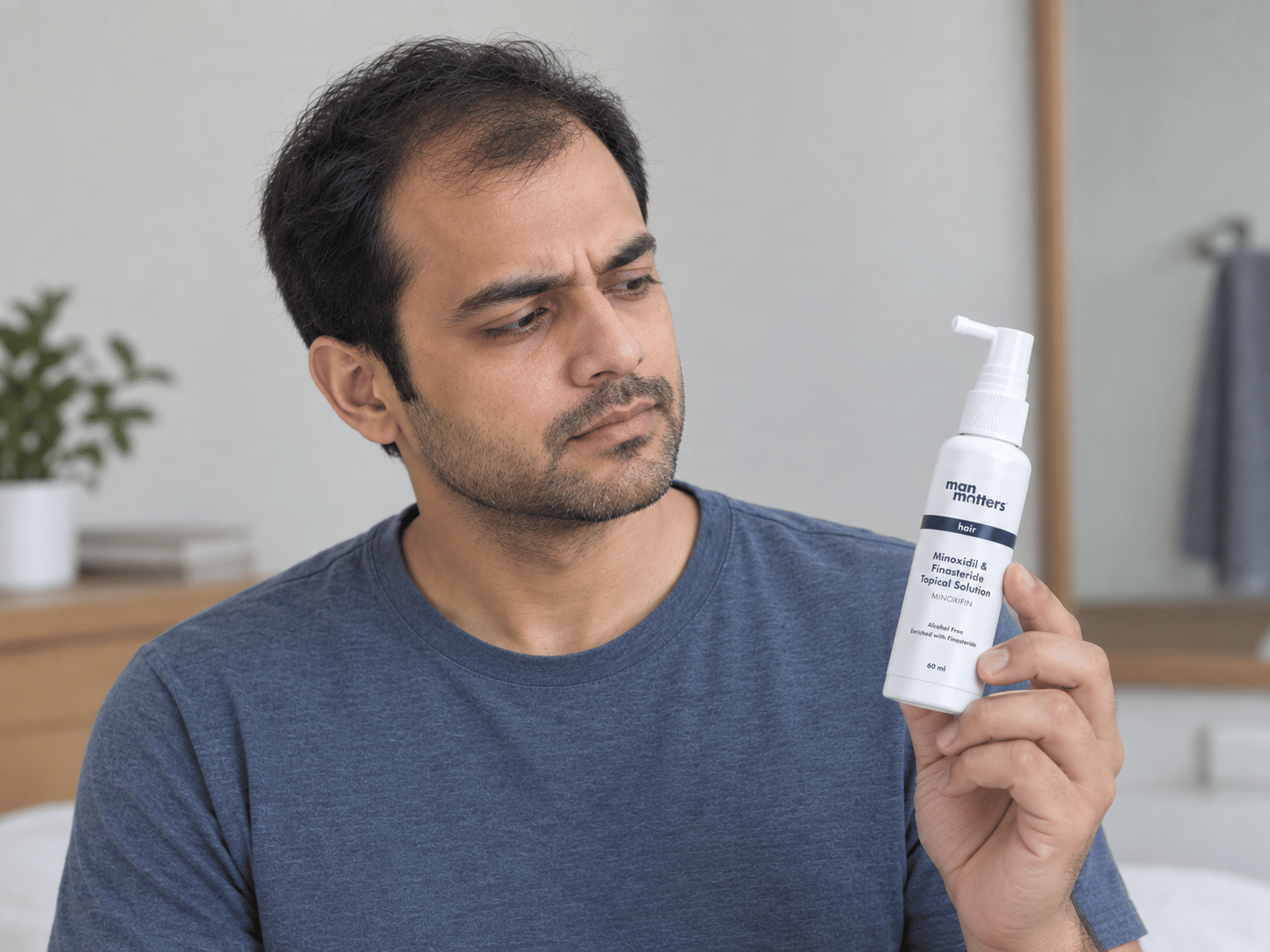
Finasteride is often referred to as the gold standard treatment for men who are noticing a receding hairline or thinning crown. But does it regrow hair, or just hold the line? Clinical evidence suggests both effects but the extent of visible regrowth is highly dependent on where the treatment is initiated.
The short answer is Yes. Finasteride can increase the amount of hair on the scalp in men with male pattern hair loss and decrease the loss of additional hair. In clinical trials of 1 mg daily, significant increases in hair count versus placebo were observed over one to two years, though during this period the placebo group continued to lose hair. The effect is progressive and results vary according to the duration of treatment, pattern of hair loss and individual response. Finasteride is only approved for male pattern hair loss (androgenetic alopecia) so the cause of the hair loss should be determined before treatment.
Does Finasteride Actually Regrow Hair?
Yes, finasteride can increase hair growth in men with male pattern hair loss, but the response is variable and the treatment also works by slowing further loss.
What counts as regrowth?
In clinical terms, regrowth usually refers to more hair and thicker hair in areas that still have some active follicles, not the complete restoration of hair in patches that have been bald for years. Review of phase III trial data for finasteride in 1,879 men demonstrated that 48% of finasteride recipients had improvement in global photographic ratings at one year and 66% at two years compared to 7% of placebo recipients at each time point. The same review found that after two years 83% of men on finasteride had shown no further hair loss from baseline, compared to 28% of men on placebo – a reminder that “no further loss” and “visible new growth” are two different, overlapping effects that finasteride can produce.
How Does Finasteride Help Hair Grow?
Finasteride is a specific inhibitor of type II 5-alpha-reductase which inhibits the conversion of testosterone to dihydrotestosterone (DHT) and is thought to reduce the androgen driven miniaturization involved in male pattern hair loss. In layman's terms, it works upstream of the hair follicle and not right on the scalp surface.
Why does reducing DHT matter?
5-alpha reductase is an enzyme that converts testosterone to DHT and in genetically sensitive scalp follicles DHT initiates a progressive shrinking process known as miniaturization over subsequent growth cycles. Finasteride, by reducing scalp DHT levels, provides the hair with the opportunity to recover instead of shrinking further with each cycle. This is also consistent with the findings in men with frontal hair loss, where a reduction in DHT activity was accompanied by an increase in hair counts during the course of the study.
What Does Clinical Research Show About Finasteride Regrowth?
Randomized clinical trials among men with male pattern hair loss have suggested that finasteride 1 mg/day can improve hair counts and photographic assessments compared with placebo.
What happened after one year?
In two combined, placebo-controlled, one-year trials of 1,553 men aged 18 to 41, finasteride produced a clinically significant increase in hair count, about 107 more hairs than placebo in a standardized scalp area with a baseline count of 876 hairs, alongside better patient, investigator and photographic assessments. Conversely, men on placebo continued to lose hair during the same period.
What happened after two years?
This benefit was not un-done by extending treatment to two years. In the same trial cohort, the hair-count advantage over placebo had grown to about 138 hairs by year two, and a separate review of the phase III program found the improvement was, if anything, more pronounced at 24 months than at 12.
Does finasteride increase hair thickness?
The hair count is only part of the story. One study measured both the hair count and the hair weight, and found net improvements over placebo of about 9% in hair count versus about 26% in hair weight at 48 weeks, increasing to about 15% versus 36% at 96 weeks, suggesting hair also grows thicker and longer, not just more numerous. Longer-term data for four years showed continued advantage in hair weight over placebo even when the placebo group’s hair weight decreased over the same period. A wider systematic review, pooling twelve placebo-controlled studies and nearly 4,000 men, found a similar result, reporting a mean hair-count improvement over placebo of about 9% in the short term and 24% long term.
How Long Does Finasteride Take to Regrow Hair?
Clinical trial differences are seen over longer treatment periods, not weeks and visible changes typically take months. Anyone looking for a sudden, dramatic change will probably be disappointed and may stop treatment before it has had a chance to work. This is why consistency matters as much as the treatment itself: results build over time, and they depend on uninterrupted daily use rather than occasional doses.
What may happen in the first few months?
Trials generally have clinical endpoints that can take months, not weeks, and so early expectations should be modest. The prescribing information for finasteride says that, generally, daily use for at least three months is needed before any benefit is seen. Some men also report an initial period of increased shedding over the first few months of treatment – a phenomenon that trial data suggests some users go through during this window, rather than something that happens to everyone. It is, in fact, usually explained as hairs in a resting phase falling out before a new growth cycle begins, not a sign that the treatment is failing. If shedding worries you, speak to a dermatologist before stopping or changing your routine. Stopping at this stage means losing the progress the treatment was building toward.
What about around six months?
In a 24-month, placebo-controlled study of 424 men aged 41 to 60 with mild-to-moderate, predominantly vertex hair loss, photographic improvement was statistically significant from month 6 and continued through month 24. It’s reasonable to expect to see some initial visible signs within six months and it’s worth noting that this particular outcome is from an older-age cohort specifically, as response may vary somewhat by age group and scalp region.
What else affects your results besides the treatment?
Finasteride works against one cause of male pattern hair loss: DHT. But the loss of hair is rarely caused by one thing. Diet, sleep, stress, and nutritional gaps can all contribute to hair loss, so a single ingredient is not a complete plan. The best way to go about this is to first consult a dermatologist, who can verify the cause of your hair loss, recommend a routine appropriate to your stage, and check in on progress over time. The routine only works if you do it every day from then on. If your doctor finds that your hair loss is due to a nutritional deficiency, treatment along with supplements may be recommended. Supplements tackle a different reason for hair fall. They don't quicken the finasteride effect, so it is worth seeing if you have a deficiency with a blood test before adding one.
Can Finasteride Regrow a Receding Hairline or Frontal Hair?
Evidence suggests that finasteride can improve frontal scalp hair in men with androgenic alopecia, but response at the hairline is variable and should not be presented as a guaranteed restoration.
What does the frontal-scalp study show?
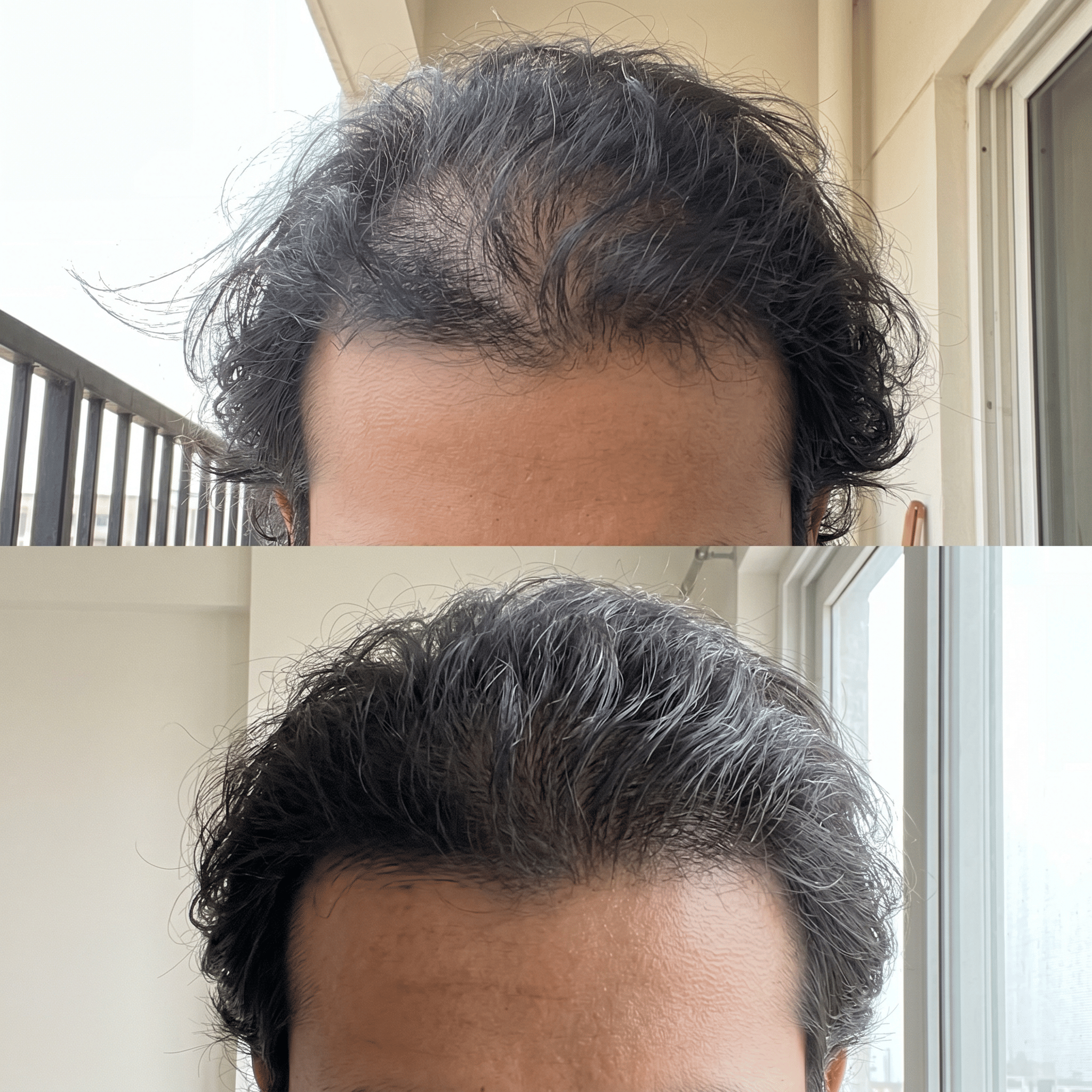
In a one-year controlled study with a one-year extension, men treated with finasteride had a significant increase in hair count in the frontal and anterior-mid scalp along with better patient, investigator and photographic ratings, with maintenance or improvement in the second year. A separate secondary analysis across age groups showed that younger men (18-41) showed a significant improvement across the vertex, anterior/mid-scalp and in both the frontal and temporal hairline, whereas men aged 41-60 showed a significant improvement mainly at the vertex and anterior/mid-scalp, rather than at the hairline itself. Response at the hairline and temples is generally less predictable than at the vertex or crown, and it tends to decline further with age.
The prescribing information for finasteride states that efficacy has not been established for bitemporal recession, the hairline that recedes at the temples. In practical terms, this means that crown and mid-scalp thickening is the more reliably reported outcome, while a fully restored hairline should not be the expectation going in.
Does Finasteride Work Without Minoxidil?
Yes. Finasteride alone has shown benefits in terms of hair counts and photographs in placebo-controlled trials. Minoxidil is not required for finasteride itself to show an effect. Long-term studies separately support continued benefit with finasteride alone over extended follow-up. There’s a lot of people who have opted to use the 2 together as they work differently - finasteride works on DHT, minoxidil works differently on the scalp - but that’s a personal or clinician decision, not a requirement for finasteride to work.
But for those wanting a single, simplified regimen, one option to discuss is ManMatters' 5% Minoxidil + 0.1% Finasteride combination formulation. This is a different formulation than oral finasteride alone, so it should be considered a separate product decision
Who Is Most Likely to See Hair Growth With Finasteride?
The best evidence comes from men with androgenetic alopecia who are maintained on treatment long enough to assess response. Visible regrowth may be less evident when hair loss is more advanced.
Does age alone determine whether it will work?
Age shouldn't be seen as a single cutoff for whether finasteride is worth trying. Clinical trials have included men aged 18-41 and men aged 41-60, and the response is more related to the underlying cause and pattern of hair loss, how long it has been developing and if sufficient responsive follicles remain than to age alone.
Does the extent of hair loss matter?
Yes, the stage of hair loss does affect how much visible change is realistic. The most obvious example of an area unlikely to respond is one that is completely smooth and shiny, where follicles are no longer active, as there is little for the treatment to work with. This isn't the same as saying advanced hair loss guarantees no benefit; it means expectations should be scaled to how far miniaturisation has progressed, rather than assuming a uniform outcome for every stage. Since it's hard to judge your own stage from a mirror, getting it assessed by a dermatologist is the most reliable starting point. A dermatologist can review your hairline and crown alongside your family history, lifestyle and current concerns, identify your stage of hair loss, and set realistic expectations before you begin treatment. Man Matters offers dermatologist consultations that include this process of stage assessment.
Does Finasteride Regrow Hair Permanently?
No treatment should be described as permanent regrowth. Evidence has shown that benefits are dependent on continued treatment and hair loss can continue once treatment is stopped. This is one of the most common areas of confusion about finasteride.
What happens if finasteride is stopped?
Finasteride’s own prescribing information states that the effect is reversed within 12 months of stopping treatment. Mechanistic research on treatment withdrawal has provided support for this, showing that in the small dataset studied, hair that was previously stable and drug-responsive miniaturized and became unproductive within about 30 months of stopping treatment, evidence for a “rebound” pattern rather than a permanent gain. There is no single timeline that applies to everyone after stopping, as the rate of change varies from person to person, but the trend indicated by the evidence – from the regulatory label and independent research points to a gradual reversal of effects over the course of about one to two and a half years, rather than a permanent effect.
What Are the Limitations and Safety Considerations?
Finasteride is not suitable for all types of hair loss and treatment should be decided according to its known side effects and contra-indications.
What should readers know before treatment?
Finasteride is a prescription drug. Adverse effects related to sexual function, such as decreased libido, ejaculation disorder and erectile dysfunction, were reported significantly more often with finasteride than placebo (3.8% v 2.1%), but these effects reversed on stopping treatment and often resolved even with continued use as per the phase III trial data. The drug’s label also states that finasteride is not indicated for use in women and that women who are or may become pregnant should not handle crushed or broken tablets because of the potential risk to a male fetus. It should not be started or stopped, combined with other treatments, or adjusted without guidance of a clinician who can weigh these factors against the expected benefit for your specific situation. This article is not a substitute for that discussion, and readers should read it as background context, not a personalized recommendation.
When Should You See a Dermatologist About Hair Loss?
A dermatologist is appropriate when the diagnosis is uncertain, the pattern is unusual, or hair loss is sudden or patchy rather than typical male pattern loss. Finasteride is indicated in the prescribing information for only male pattern hair loss (androgenetic alopecia), and not for women, so it is important to have an accurate diagnosis before assuming this is the right treatment. If you see sudden shedding, patchy bald spots, scalp irritation, or hair loss that does not follow the typical receding hairline and crown pattern, you should seek evaluation instead of self-treating - a dermatologist consultation offered by Man Matters can help confirm what's actually going on before you start any treatment.
Frequently Asked Questions
Does finasteride regrow hair permanently?
No. Finasteride can maintain or improve hair as long as treatment continues, but it should not be described as permanent regrowth. The product’s prescribing information states that if you stop treatment the effect will reverse within 12 months. Independent research on stopping the treatment found similar deterioration after dosage was stopped.
Is 25 too late for finasteride?
No fixed age cut-off should be required. Placebo controlled trials have been performed in men aged 18-41 and in men aged 41-60. The response is more related to the cause of hair loss, the pattern of hair loss, the extent of hair loss and the presence of responsive follicles than to age alone.
Is taking finasteride worth the risk?
Yes for most men who have male pattern baldness. Sexual side effects were reported in 3.8% of finasteride users vs. 2.1% on placebo and these effects reversed in most men after discontinuation. That risk profile is why finasteride remains the standard prescription treatment for this condition.
Does finasteride regrow hair without minoxidil?
Yes. In trials that were placebo-controlled and used finasteride alone, hair count was clinically significantly higher versus placebo at one and two years. Thus in men with androgenetic alopecia finasteride has an effect that can be seen even without minoxidil.
Is initial shedding normal after starting finasteride?
Some men will notice increased shedding in the first few months of treatment, but this is usually followed by measurable improvement from around six months onward. This should be considered a pattern observed in the treatment timeline and not a guarantee for every user.