
Does Minoxidil Cause Hair Loss?

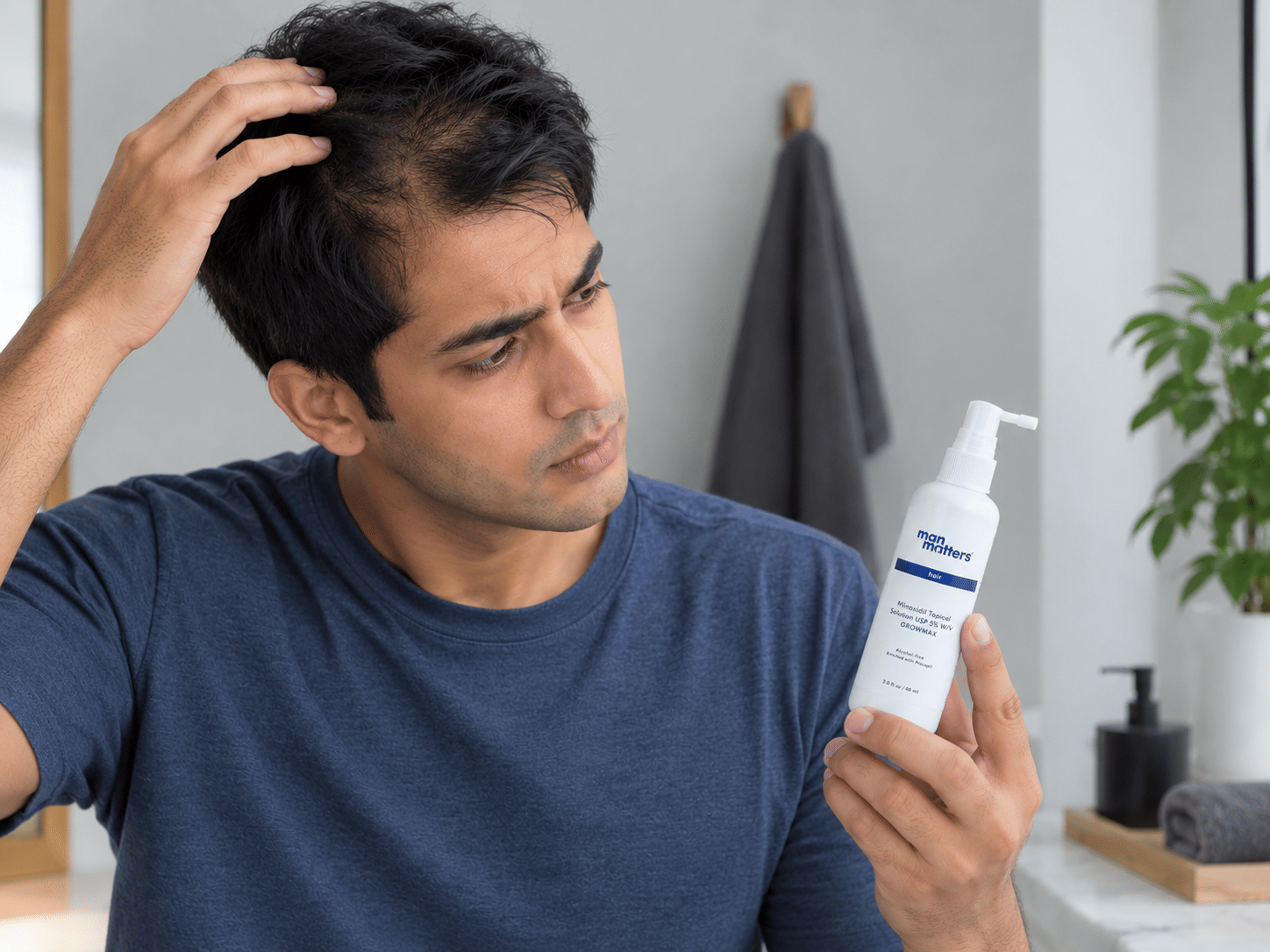
Minoxidil can cause a short burst of hair shedding in the first weeks, but it does not cause long-term hair loss. The shedding comes from old, resting hairs falling out as new ones start to grow. In a 2025 study of 49 adults, the rise in shedding stayed within the first 12 weeks. It ended sooner on 5% minoxidil than on 2%.
Why Does Minoxidil Make Hair Fall Out at First?
Minoxidil pushes resting hair follicles into a new growth phase. To make room, the old hairs in those follicles fall out first. This is called minoxidil shedding.
Each hair follicle cycles through three phases. The growth phase lasts years. A short transition follows, and then a resting phase of about three months. At the end of the rest, the old hair drops out.
Minoxidil shortens the resting phase and lengthens the growth phase. A 2021 review of minoxidil¹ describes this effect on the hair cycle. So many resting hairs fall at once, instead of slowly over months. New, stronger hairs then grow from the same follicles.
How Long Does Minoxidil Shedding Last?
For most men, the extra shedding settles within the first 12 weeks. In a 2025 study, it lasted longer on 2% minoxidil than on 5%.
A 2025 study of shedding on minoxidil² followed 49 adults with pattern hair loss for 24 weeks. They used 2% or 5% minoxidil, and hair fall was counted every four weeks. Shedding rose for a while within the first 12 weeks, then settled.
The strength made a difference. On 2% minoxidil, the shedding phase lasted longer than on 5%.
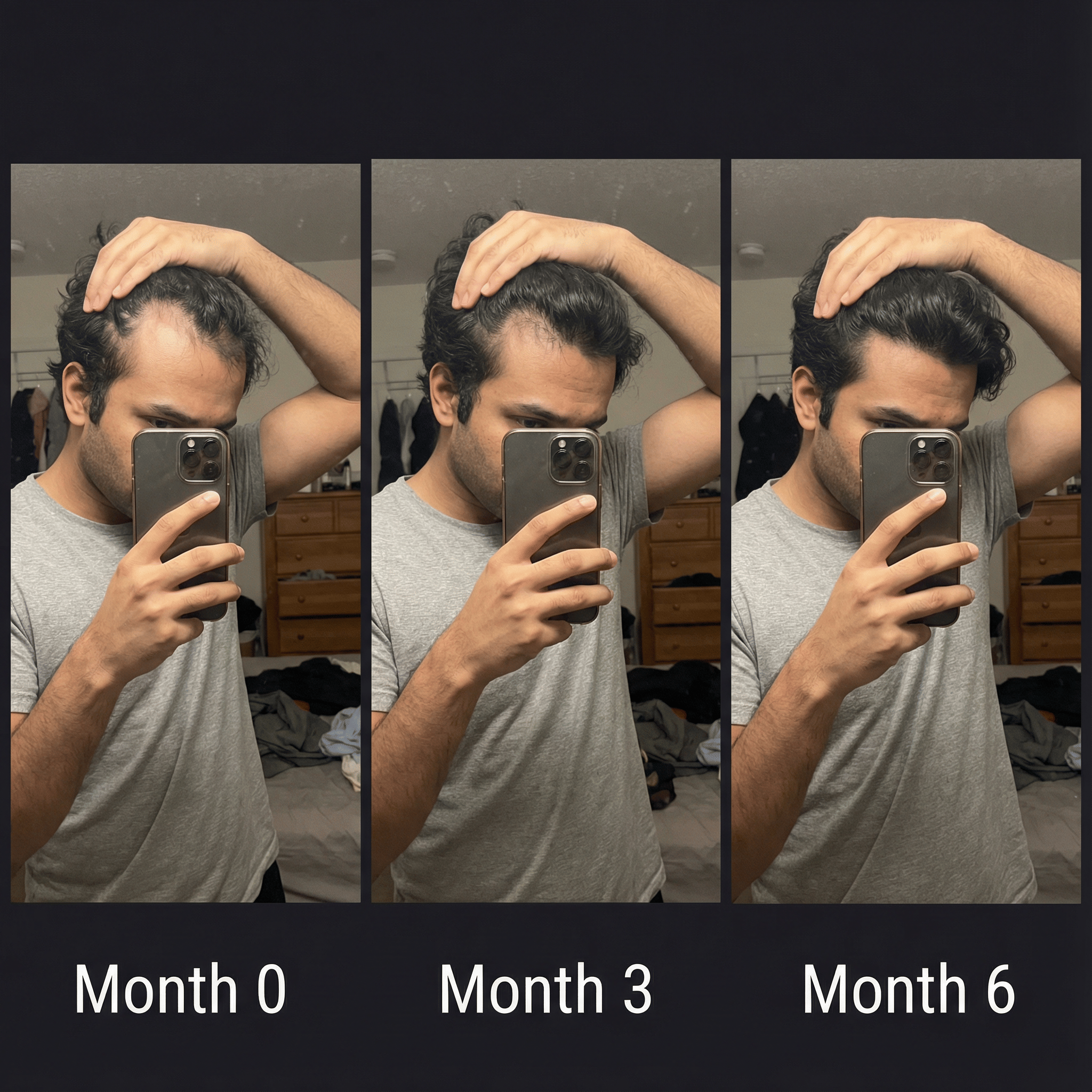
The table below shows what many men notice. It is a typical pattern, not data from the study.
Can Minoxidil Worsen Hair Loss?
No, minoxidil does not make pattern hair loss worse. The early shed is temporary. Hair fall that goes on past about three months points to another cause, or to hair loss moving on.
Is shedding a good sign?
Often, yes. Shedding usually means the follicles are responding to minoxidil.
In the same 2025 study, people on 5% minoxidil who shed more in the early weeks showed bigger gains on scalp scans at 24 weeks. This link was seen in the 5% group of one study only. Shedding does not promise results, but it is not a sign of failure.
What matters is that you keep going. If you stop during the shedding phase, you also stop the new growth it makes room for.
When shedding is not the explanation
If hair keeps falling after three months, minoxidil shedding is unlikely to be the cause. Pattern hair loss may be moving on, or another problem may be at work. The table below helps you check, and a dermatologist can confirm.
Shedding or something else: How to Tell
Minoxidil shedding has a clear pattern. Other kinds of hair fall do not follow it. Use this table to check.
If your hair fall does not match the left column, see a dermatologist. Thyroid problems, low iron, stress and illness can all cause hair fall. These need their own treatment.
Will You Lose Existing Hair If You Stop Minoxidil?
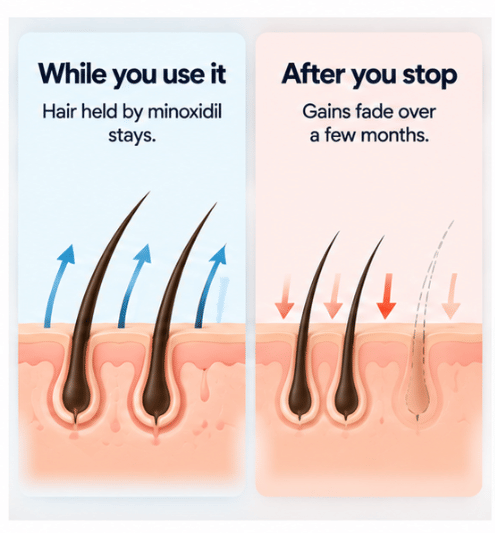
The hair that minoxidil helped grow will fall out over the next few months. The US National Library of Medicine's MedlinePlus guide to topical minoxidil³ notes that most new hair is lost within months of stopping.
This is not minoxidil causing hair loss. It is your pattern hair loss picking up where it left off. A 2013 review of early hair loss treatment came to the same view: gains fade quickly once treatment ends.
So the real question is not whether minoxidil causes hair loss. It is whether you are ready to use it for the long term. Pattern hair loss keeps going in the background, so the treatment has to keep going too. Our guide to the stages of hair loss shows how it moves over time. To see what results can look like month by month, read our minoxidil before and after guide.
Does Minoxidil Stop Working After a Few Years?
Results usually hold while you keep using it, though they can level off for some men. The main trials ran for about a year, so long-term data are limited. A levelling off may reflect pattern hair loss moving on underneath, rather than the drug wearing off.
At that point, a dermatologist may add a DHT blocker such as finasteride. Minoxidil helps hair grow; a DHT blocker slows the process that shrinks follicles.
Strength also matters for long-term results. In a 2002 trial of 393 men⁴, 5% minoxidil grew more hair than 2% over 48 weeks. Itching and scalp irritation were more common on 5%.
What Are the Downsides of Minoxidil?
The main downsides are scalp itching or flaking, the early shed, and the need for daily use. MedlinePlus lists scalp itching, dryness, scaling, flaking, irritation and burning as possible side effects. In the 2002 trial of 393 men, itching and irritation were more common on 5% than on 2%.
The biggest commitment is time. Minoxidil only works while you use it. MedlinePlus advises at least four months of use, and up to a year, before you judge results.
Serious effects are rare. A fast heartbeat, chest pain, swelling or sudden weight gain needs a doctor the same day, as MedlinePlus advises. For more detail, see our guide on whether minoxidil is safe.
How Can You Reduce Minoxidil Shedding?
You cannot fully stop it, but you can make the start easier on your scalp. Use the right dose, on a dry scalp, at the same times each day.
- Apply minoxidil to a dry scalp, not wet hair.
- Use the dose on the label; more does not work faster.
- Do not skip days during the shedding phase.
- Wash gently, and avoid harsh scrubbing.
- Take a photo every month so you can see real progress.
For dose and timing, read our guide on how often to use minoxidil 5%.
Some men stop minoxidil because the scalp itches, not because of shedding. Alcohol and propylene glycol are the main irritants in standard minoxidil solutions, a 2014 formulation study⁵ found. Man Matters' Growmax (5% Minoxidil + Procapil) has an alcohol-free formulation which reduces the chances of side-effects like scalp irritation and redness, commonly associated with minoxidil. If you face any issues, speak to a doctor. Use 1 ml in the morning and 1 ml at night, for at least six months.
When Should You See a Dermatologist?
See a dermatologist if shedding lasts more than three months, or comes with a red, sore or patchy scalp. Go sooner if hair falls from all over your head, or if you feel unwell.
Young men are the largest group asking for help. Man Matters data from 7,04,152 hair fall consultations (Aug 2025 to Aug 2026) shows 87.2% came from men under 35." Confirm with the data owner before it goes external.
On the Man Matters app, you can talk to a dermatologist. It can help you understand why minoxidil shedding happens, reassure you that it is a normal part of starting treatment, and guide you on staying consistent with your routine. Many men get scared when they notice increased hair fall and stop using minoxidil too early, potentially missing out on its benefits. If shedding is unusually heavy or persists beyond 4–6 weeks, you can consult the same doctor again to assess what is happening and decide on the next steps.
Hair loss is common, and early shedding on minoxidil is a normal part of the journey. The men who see lasting change follow a plan built for their diagnosis. They use it as directed, keep up the basics, and stay with it for at least six months.
Frequently Asked Questions
Can minoxidil worsen hair loss?
No, minoxidil does not make pattern hair loss worse. Some men shed more hair in the first weeks. In a 2025 study of 49 adults, this rise stayed within the first 12 weeks. If hair fall goes on past about three months, see a dermatologist to check for another cause.
Will I lose existing hair if I stop minoxidil?
You will lose the hair that minoxidil helped grow or hold, usually within a few months. Your hair goes back to where pattern hair loss would have taken it. Stopping does not harm the scalp or cause extra loss beyond that. Speak to a doctor before you stop.
What happens after 2 years of minoxidil?
Most men keep their gains as long as they keep using it. Results can level off for some men, as pattern hair loss continues underneath. The main trials ran for about a year, so data beyond that are limited. A dermatologist may add a DHT blocker such as finasteride.
What are the downsides of minoxidil?
The main downsides are scalp itching or flaking, early shedding and the need for daily use. Itching and irritation are more common on 5% than on 2%. Results take at least four months to judge. A fast heartbeat, chest pain or swelling is rare but needs a doctor the same day.
Does minoxidil actually regrow lost hair?
Yes, for many men it regrows some hair, most often at the crown and in thinning areas. In a 48-week trial of 393 men, 5% minoxidil grew more hair than 2%. Areas that have been bald for many years respond less well.