
Norwood 2 Hairline: What It Means and When to Act

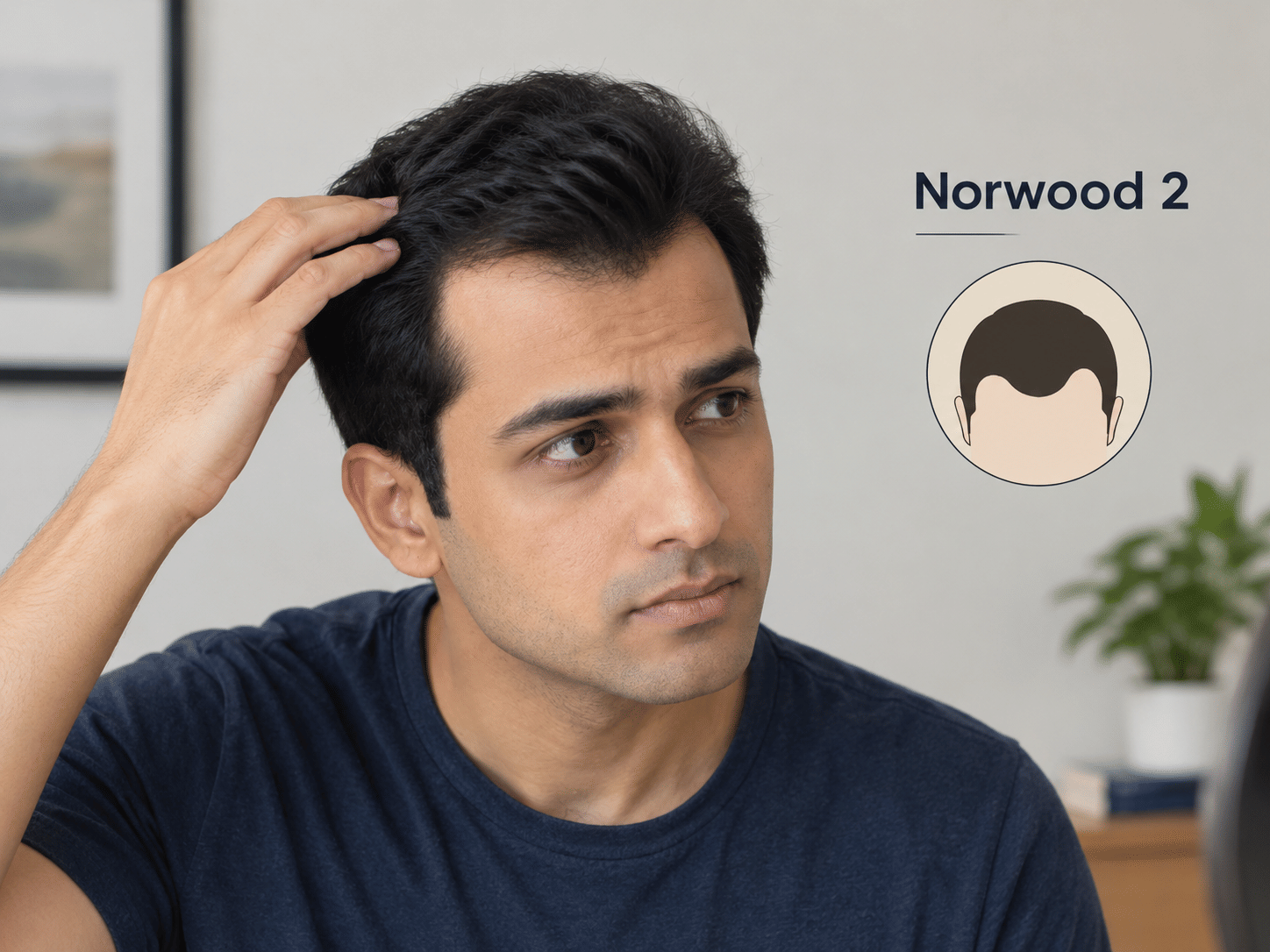
Norwood 2 is the stage where the hairline has moved back slightly at the temples. The recession is small and even on both sides, often forming a soft M shape. The front and crown still have full hair. In many men, Norwood 2 is simply a mature adult hairline. In others, it is the first sign of male pattern hair loss.
What Does Norwood 2 Look Like?
At Norwood 2, the corners of the hairline sit a little further back than in your teens. The change is usually about a finger's width or less. Both temples look much the same. The rest of the hairline stays fairly straight.
Dr O'Tar Norwood described this stage in his 1975 paper on male pattern baldness. His scale has seven main stages and is still the one most doctors use.
For the full seven-stage scale, read our guide to the stages of hair loss.
Is Norwood 2 a Mature Hairline or Balding?
It can be either. That is the key question at this stage. A mature hairline moves back a little in the late teens or twenties, and then stops. Early male pattern hair loss looks the same at first, but it keeps moving.
The scale alone cannot tell them apart. A 2016 study of men with early pattern hair loss noted a gap in the Norwood scale. It is not precise at the front of the scalp in early stages. The same study found that most men had more recession on the right side than the left.
How Can You Tell If Norwood 2 Is Progressing?
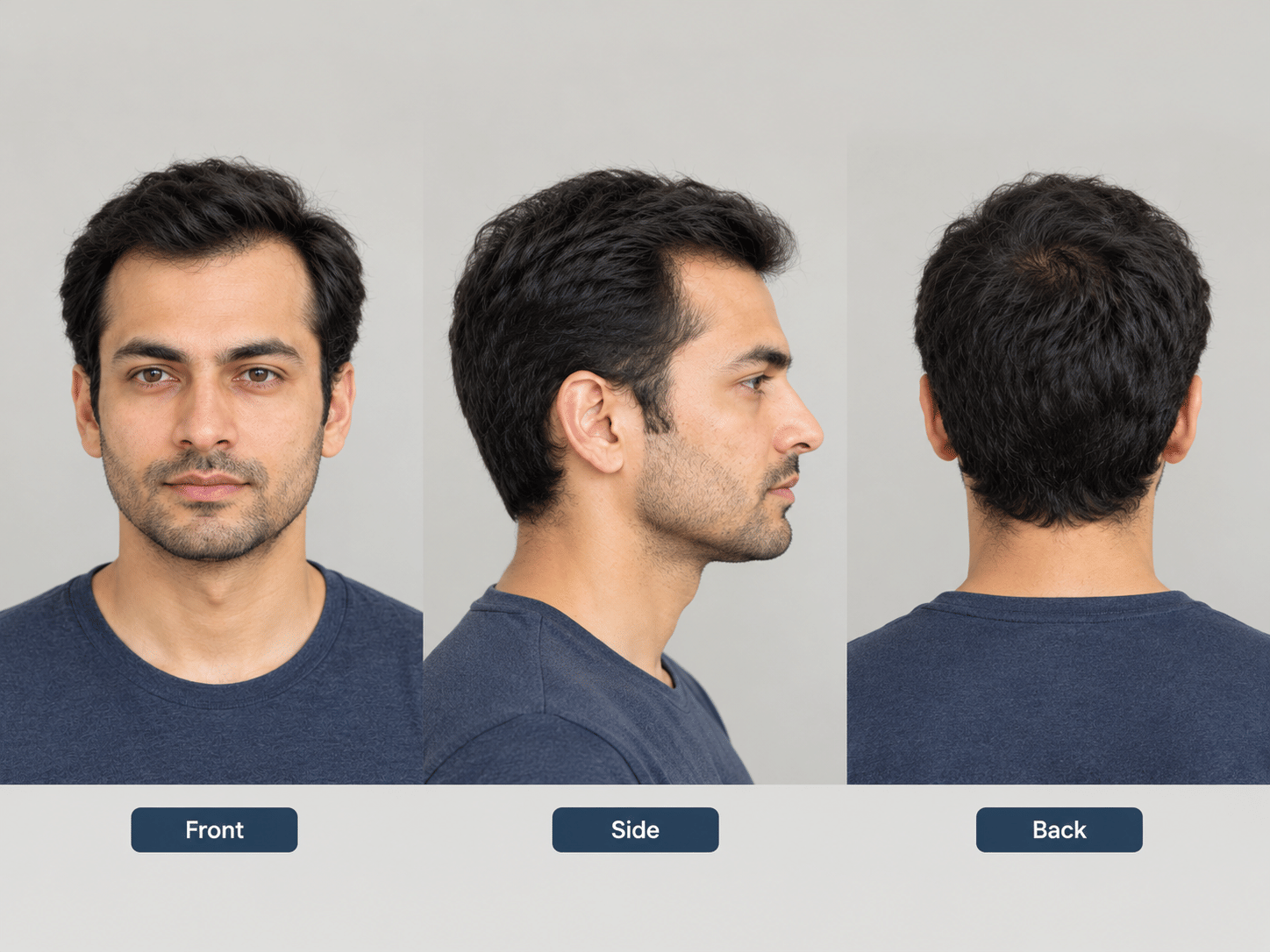
Watch for change, not shape. One photo cannot show whether your hairline is moving. A set of photos over time can.
Use this simple routine:
- Take a photo of your hairline from the front and each side.
- Use the same light and the same spot each time.
- Pull your hair back so the temples are clear.
- Repeat every three months.
- Compare the depth of the temple corners, not the overall look.
Tracking every three months is not obsessive. It swaps daily worry for a clear answer.
Other signs matter too. Hair at the temples that turns fine and wispy is a warning sign. So more hair falls on your pillow or in the shower for months. Thinning at the crown on top of a Norwood 2 hairline also points to pattern hair loss.
How Common Is Norwood 2 in India?
Very common. In a 2009 population study of 1,005 Indian men aged 30 to 49, 58% had pattern hair loss. Among men with hair loss, grade 2 was the most common, at 27.3%. Grade 3 was close behind, at 21.8%.
The same study found that hair loss rose with age. It was seen in 47.5% of men aged 30 to 35. By age 41 to 45, the figure was 73.2%.
A separate 2007 study of 150 Indian men with pattern hair loss, by Sehgal and colleagues, found the same pattern. Norwood 2 (28%) was the most common type, followed by Norwood 3 (15%).
Is Norwood 2 Normal at 21?
Mild temple recession at 21 can be normal. Many men's hairlines mature in their late teens and early twenties. What matters is whether it keeps moving.
Early hair loss is common among young Indian men. Man Matters consultation data from 7,04,152 men (Aug 2025 to Aug 2026) shows 16.2% report a receding hairline in their twenties. It also shows that 87.2% of hair fall consults come from men under 35. And 65.2% were already at Norwood 3 or higher by the time they first consulted. Many men wait for a clear sign, and at Norwood 2 there usually isn’t one.
So a Norwood 2 hairline at 21 is not a reason to panic. It is a reason to watch closely. If it moves over six to twelve months, speak to a dermatologist.
Should You Treat Norwood 2?
If a dermatologist confirms early male pattern hair loss, starting treatment now protects the most hair. If your hairline has simply matured, you do not need medicine. Photos and a check-up help decide which one you have.
Early treatment matters because untreated pattern hair loss tends to keep going. In the 1998 finasteride trials of 1,553 men aged 18 to 41, men on the placebo kept losing hair over two years. Men on finasteride gained 107 hairs at one year and 138 at two years, compared with placebo.
Minoxidil works best early, too. The US National Library of Medicine's MedlinePlus guide to topical minoxidil says it works best in men under 40 with recent hair loss. It advises at least four months of use before judging results.
Strength matters. In a 2002 trial of 393 men, 5% minoxidil grew more hair than 2% over 48 weeks. Itching and scalp irritation were also more common at 5%.
Man Matters' Growmax (5% Minoxidil + Procapil) has an alcohol-free formulation which reduces the chances of side-effects like scalp irritation and redness, commonly associated with minoxidil. If you face any issues, speak to a doctor. Use 1 ml in the morning and 1 ml at night, for at least six months.
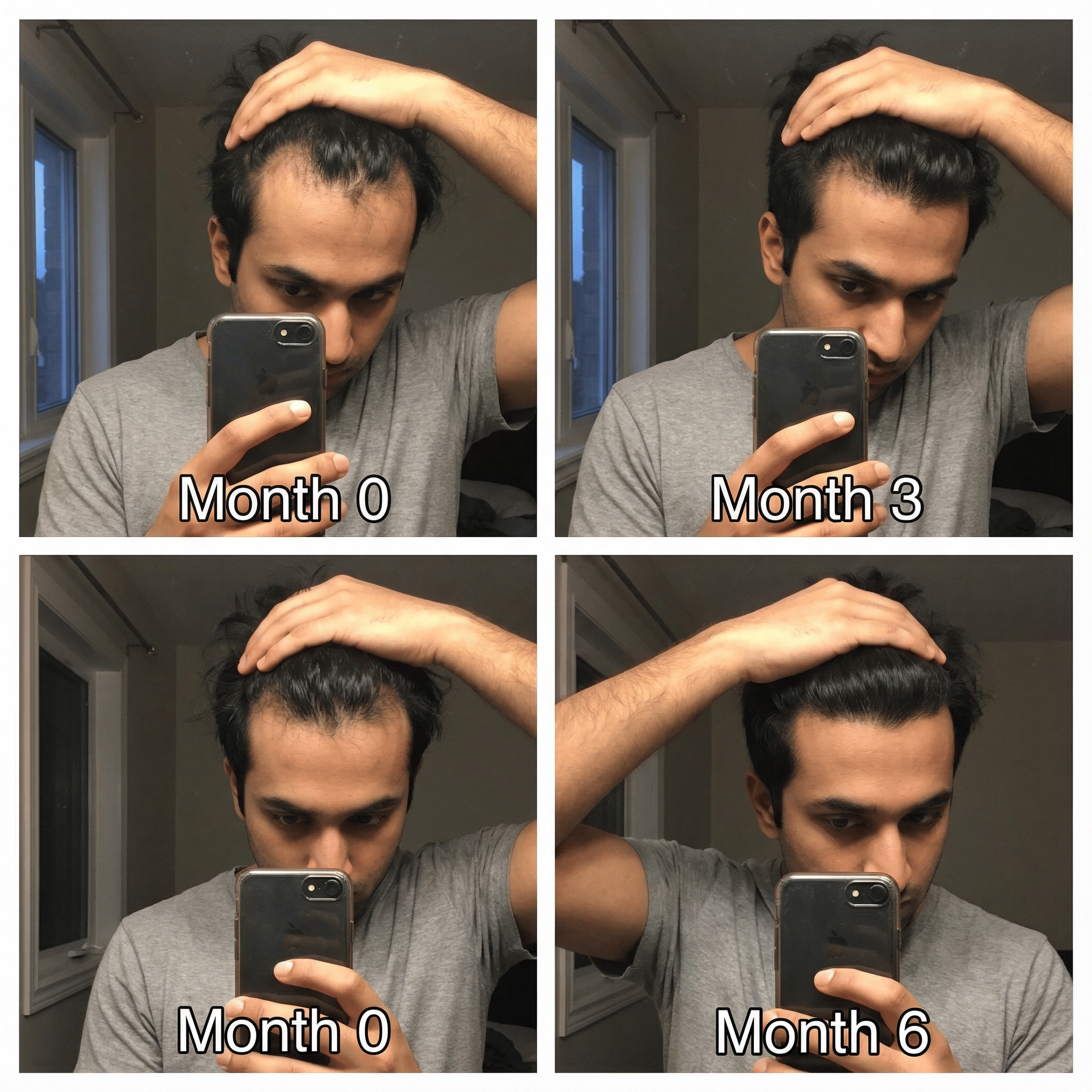
For dose and timing, read our guide on how often to use minoxidil 5%. To see what results can look like month by month, read our minoxidil before and after guide.
Can Norwood 2 Grow Back?
Some lost hair at the temples can grow back with treatment, but the temples are the slowest area to respond. The bigger win at Norwood 2 is holding the hairline you have. Men who start early often keep a Norwood 2 hairline for years.
Medicine only works while you use it. Hair gained on minoxidil is usually lost within a few months of stopping, MedlinePlus notes. Plan for treatment as a long-term routine, not a short course. Many routines get dropped around week three, when nothing looks different yet. Staying with it is the hard part.
When Should You See a Dermatologist?
See a dermatologist if your hairline is still moving, your temples look thinner, or your crown starts to thin. Go sooner if hair loss is sudden, patchy or comes with an itchy or sore scalp.
Most men at this stage keep the question to themselves and guess. Man Matters was built for the gap between ‘something looks different’ and ‘here is the plan’. It starts with a short hair assessment, then you can talk to a dermatologist. They check your family history, lifestyle, diet, sleep and a photo of your hairline. Then they find the root cause and tell you whether it is a mature hairline or early hair loss. Only then do they set the right treatment. Follow-ups keep it going, because a plan is something you stay in, not something you buy once. When you buy minoxidil or finasteride from Man Matters, you get a free pass to talk to a dermatologist.
Hair loss is common, and Norwood 2 is the best time to act on it. The men who keep their hairline follow a plan built for their diagnosis. They use it as directed, keep up the basics, and give it at least six months.
Frequently Asked Questions
Is Norwood 2 balding?
Not always. Norwood 2 can be a normal mature hairline that moves back once and stops. It can also be the first stage of male pattern hair loss. The difference shows over time. If the temples keep moving back or the hair there thins, it is likely early balding.
Is Norwood 2 too late to treat?
No. Norwood 2 is the earliest stage of the scale beyond a full hairline. It is the best time to start treatment if a dermatologist confirms pattern hair loss. Minoxidil works best in men under 40 with recent hair loss, according to MedlinePlus.
Can you stop a Norwood 2 from getting worse?
Often, yes. Minoxidil and finasteride can slow pattern hair loss and help hold the hairline. Results need daily use for at least four months, and gains fade if you stop. A dermatologist can confirm whether you need treatment at all.
How long does Norwood 2 last?
It varies a lot. A mature hairline can stay at Norwood 2 for life. With pattern hair loss, some men stay at stage 2 for years. Others reach stage 3 within a few years. Photos every three months show which way you are heading.