
Procapil vs Minoxidil: Which Regrows Hair Faster? (Side Effects Compared 2026)

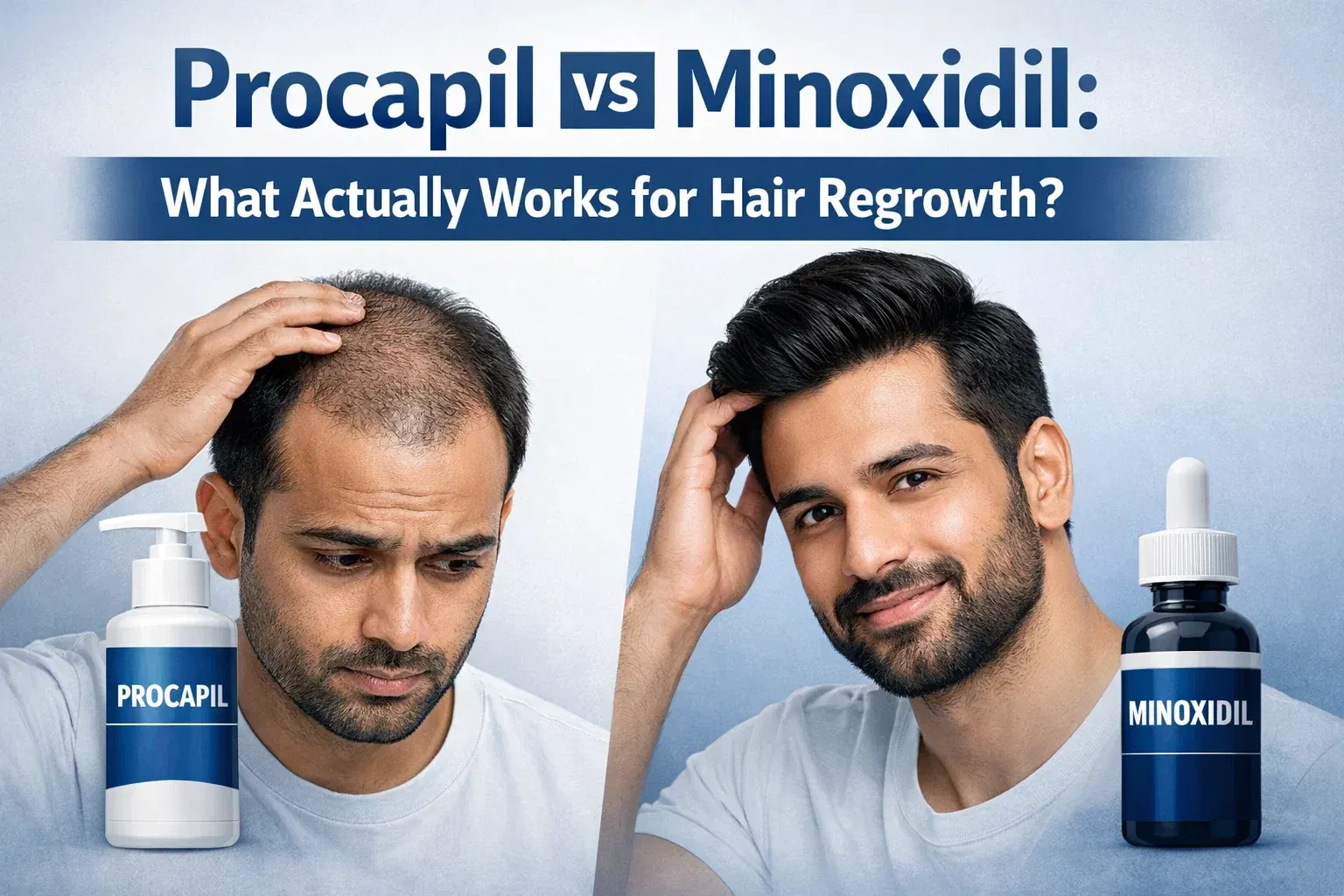
Hair loss solutions today are no longer limited to one hero ingredient. Two of the most searched actives - Procapil and Minoxidil - are often compared because they work very differently but target the same goal: stopping hair fall and improving regrowth.
Two of the most known actives - Procapil and Minoxidil - are often compared because they work very differently but target the same goal: reducing hair fall and improving regrowth in androgenetic alopecia.
Understanding how they work (and when to use each) can help you choose smarter instead of experimenting blindly.
Quick Answer: Which Works Better for Hair Regrowth?
If your primary goal is clinically proven hair regrowth, Minoxidil has stronger scientific evidence and is FDA-approved for androgenetic alopecia.
Procapil, on the other hand, is primarily designed to reduce hair fall and strengthen follicles, but does not have the same level of large-scale clinical backing as Minoxidil.
In short:
- For visible regrowth → Minoxidil
- For prevention and maintenance → Procapil
- For progressive hair loss → Combination approach
What Is Procapil?
Procapil is a peptide-based anti-hair-loss complex designed to strengthen follicles and reduce DHT damage - the main cause of pattern hair loss.
 Man Matters
It contains a blend of:
- Biotinyl-GHK peptide – strengthens hair roots
- Oleanolic acid – blocks DHT formation
- Apigenin – improves scalp blood circulation
Unlike aggressive regrowth drugs, Procapil mainly focuses on preventing further hair thinning and improving follicle health.
Clinical Backing & Approval Status
Minoxidil (2% and 5%) is approved by the US FDA for treating male and female pattern hair loss and has decades of clinical data supporting its effectiveness in promoting regrowth.
Procapil is a cosmetic peptide complex and is not FDA-approved as a hair regrowth drug. While ingredient-level studies suggest it may support follicle health and reduce DHT-related damage, large-scale independent clinical trials are limited.
This difference in regulatory approval is one of the main reasons dermatologists consider Minoxidil the first-line treatment for pattern baldness.
Best suited for:
- Early-stage hair thinning
- Weak hair roots
- Preventive hair fall control
What Is Minoxidil?
Minoxidil is a clinically proven vasodilator that increases blood supply to hair follicles. This helps reactivate dormant follicles and extend the growth phase.
It is widely considered the gold standard treatment for androgenetic alopecia.
Man Matters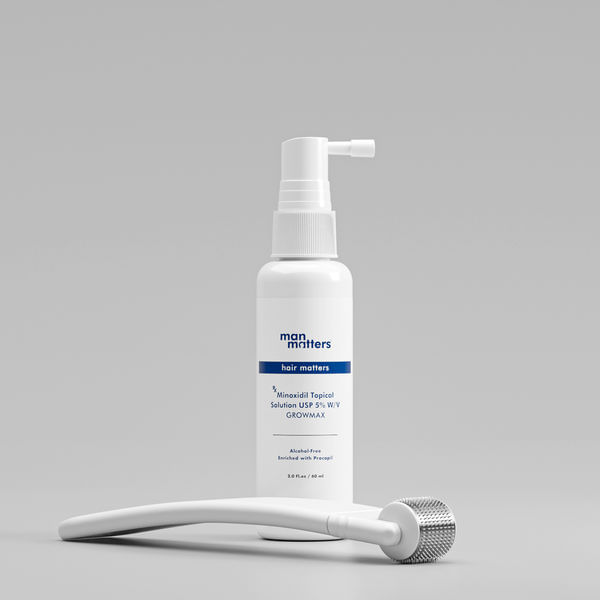
How it works:
- Improves scalp blood flow
- Stimulates inactive follicles
- Promotes thicker hair shafts
Best suited for:
- Moderate to severe hair loss
- Visible receding hairline
- Long-term regrowth treatment
Procapil vs Minoxidil: Key Differences
| Feature | Minoxidil | Procapil |
|---|---|---|
| FDA Approved | Yes (2% & 5%) | No |
| Primary Role | Stimulates regrowth | Reduces follicle damage |
| Works On | Dormant follicles | DHT-related weakening |
| Visible Results | 3–6 months | Gradual improvement |
| Initial Shedding | Common | Rare |
| Best For | Moderate–severe hair loss | Early thinning |
1. Mechanism of Action
- Procapil: Prevents follicle weakening and DHT damage
- Minoxidil: Stimulates follicle activity and regrowth
Think of it this way:
Procapil = Protection
Minoxidil = Regrowth
2. Strength of Results
Minoxidil typically shows faster visible regrowth within 3–6 months.
Procapil works more gradually by reducing hair shedding and improving density over time.
3. Side Effects
Minoxidil may cause:
- Initial shedding phase
- Scalp dryness
- Temporary irritation
Procapil is generally milder and better tolerated, making it suitable for sensitive scalps.
4. Long-Term Usage
Minoxidil requires continuous use - stopping it may reverse results.
Procapil can be used long term for maintenance without dependency concerns.
Can You Use Procapil and Minoxidil Together?
Yes - and this is where modern haircare strategies are shifting.
Dermatologists increasingly recommend combining them because they address different stages of hair loss:
- Minoxidil stimulates regrowth
- Procapil strengthens follicles and prevents future loss
This dual approach improves overall treatment outcomes compared to using either ingredient alone.
Man Matters
Can You Switch from Minoxidil to Procapil?
Switching from Minoxidil to Procapil may lead to gradual reversal of regrowth gains because Minoxidil requires continuous use to maintain results.
If discontinuing Minoxidil, dermatologists often recommend tapering and introducing supportive treatments to reduce shedding shock.
Procapil alone may help maintain scalp health but may not replace the regrowth stimulation effect of Minoxidil in advanced hair loss cases.
Where Combination Formulas Help
Many advanced topical treatments now include Minoxidil + Procapil to provide both stimulation and protection in a single routine.
For example, solutions available at Man Matters combine clinically backed actives like Minoxidil with supportive ingredients such as Procapil to target multiple hair loss triggers simultaneously.
These formulations aim to:
- Reduce shedding
- Improve hair thickness
- Support long-term follicle health
What Is the “Big 3” for Hair Loss?
The “Big 3” commonly refers to:
- Minoxidil (topical regrowth stimulant)
- Finasteride (DHT blocker)
- Ketoconazole shampoo (anti-inflammatory scalp support)
Procapil is not traditionally part of the Big 3 but is sometimes used as a supportive ingredient in combination regimens.
Which One Should You Choose?
Choose Procapil if:
- You notice early thinning
- You want preventive care
- You prefer a gentler solution
Choose Minoxidil if:
- You have visible hair loss
- You need faster regrowth
- You’re treating pattern baldness
Choose Both if:
- You want maximum results
- You’re experiencing progressive hair loss
- You want both regrowth protection
Final Takeaway
Final Verdict
Minoxidil remains the most clinically proven topical treatment for hair regrowth and is typically recommended for moderate to advanced androgenetic alopecia.
Procapil is better suited for early thinning, maintenance, and strengthening follicles but does not replace Minoxidil in terms of regrowth evidence. For many individuals, combining both can provide a balanced approach, stimulation plus protection, especially when addressing progressive hair loss.
The right choice ultimately depends on the stage of hair loss and long-term treatment goals.