
How Often Should You Use Ketoconazole Shampoo?

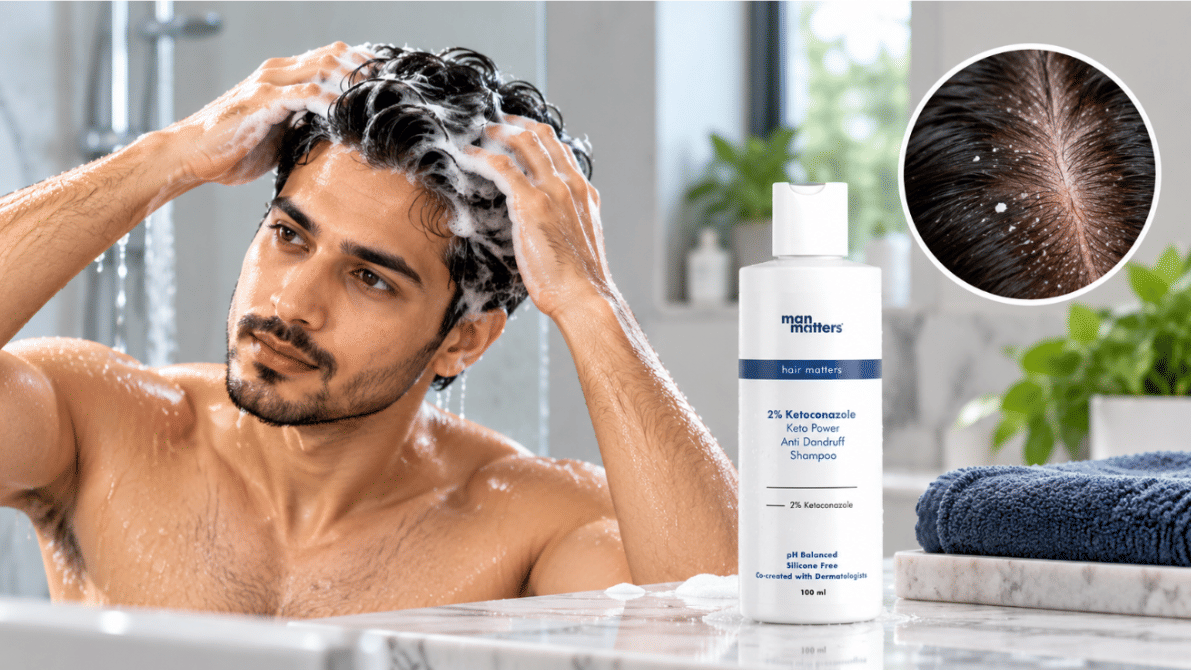
Ketoconazole shampoo is not usually intended for daily use in routine dandruff or seborrheic dermatitis. It’s used twice a week for 2 to 4 weeks, then about once a week in clinical trials to keep the flakes from returning. There are short daily courses for a different fungal skin infection so daily use is not a universal rule. There is a risk of dryness and irritation if you use it more often than you have been told. Follow your product label or doctor’s instructions for accurate information.
Can I Use Ketoconazole Shampoo Daily?
If you have ordinary dandruff or seborrheic dermatitis, it is usually not recommended to use ketoconazole shampoo every day, unless the directions on the product or your dermatologist tell you to.
The tested rhythm is 2 times per week. In a multicentre trial in 575 patients, 2% ketoconazole shampoo used twice weekly for 2 to 4 weeks produced an excellent response in 88% of patients. On other days, a normal mild shampoo keeps your hair clean without adding more medicine to your scalp.
Flakes are a small problem that gets a lot of attention, so it’s easy to see why washing more often might seem like the obvious answer. It is not. A better plan beats a heavier routine.
Why the Answer Changes by Diagnosis
Ketoconazole shampoo is used for a number of conditions. Malassezia yeasts are associated with dandruff and seborrheic dermatitis of the scalp. A separate, non-infectious fungal infection of the skin is Tinea (pityriasis) versicolor. Each condition has a schedule of its own. Usually, the overuse starts with copying the routine of one condition onto another. Knowing which condition you have comes first,which is why the journey starts with a short hair assessment to know the actual cause and stage of the problem followed by a dermatologist consultation to confirm what is driving your flakes before any scheduled treatment is set.
1% vs 2% and Label Differences
Strength and label change instructions. In a placebo-controlled study of dandruff in 176 patients, a 1% shampoo was evaluated on a biweekly basis for 4 weeks. The 2% trials used the same twice weekly rhythm for dandruff and seborrheic dermatitis. Labels also vary by country. The 2% prescription label in the US is for tinea versicolor not dandruff. Just because there is a higher number on the bottle, doesn’t mean it should be used more frequently.
How Often Should Ketoconazole Shampoo Be Used for Dandruff?
For common dandruff or seborrheic dermatitis ketoconazole shampoo is used twice a week for 2 to 4 weeks and then less often to keep the symptoms away. How long you take it for depends on the product and what your doctor recommends.
Treatment Phase
Twice weekly for 2 to 4 weeks is the pattern used in the 575-patient placebo-controlled 2% trial. In a 343-person randomised trial, twice-weekly 2% ketoconazole improved the total dandruff severity score by 73% at week 4. None of these dandruff trials tested daily use.
Maintenance Phase
Dandruff is usually recurrent, so maintenance is important. In a 6-month prevention phase, 19% of people using 2% ketoconazole once a week relapsed vs 47% on placebo. Not from extra washes, but from a regular weekly ritual.
In this case, consistency beats intensity. Most routines don't fail on day 1. By week three they fade, the itch subsides, the bottle goes to the back of the shelf.
Why Label Instructions Matter
Your pack's frequency and contact time are set for that specific formula. Follow the pack, not a generic schedule from a forum. If your pack and your doctor say different things, your doctor's plan for you comes first.
When Can Daily Ketoconazole Shampoo Use Be Appropriate?
Frequency should be matched to the condition diagnosed, product strength and medical advice. Some specific conditions or short treatment schedules may be appropriate for daily use.
Condition-Specific Exceptions
The most striking example is tinea (pityriasis) versicolor. In the trial of 2% ketoconazole shampoo, patients received either a single application or daily use for three consecutive days. That label says one application ought to be enough. A short, defined course for a skin infection is very different to a daily scalp habit.
Another fungal issue might have a different schedule advised by a doctor. That is a clinical decision for one person and one diagnosis and one time window.
Do Not Transfer One Condition's Schedule to Another
A three day course for a skin infection does not inform you about a scalp which flakes every winter. The same is true in reverse. If you don't know what condition you have, the fact that you don't know is a reason to get checked.
Most men don’t go to the dermatologist knowing what’s wrong. They make a guess. A diagnosis makes that guess into a plan of action.
Why Is Daily Use Usually Not Recommended?
Using ketoconazole shampoo more often than recommended has not been shown to provide any benefit, and may increase the likelihood of experiencing scalp dryness, irritation, redness, or other local side effects.
The honest picture: data on heavy use are sparse. On the 2% label trial, 41 people shampooed 4-10 times a week for six months in three small open label safety studies. Abnormal hair texture, pustules on the scalp, mild dryness and itching each occurred once. That’s reassuring, but it’s a small group. It does not prove that daily use gets rid of dandruff faster.
Local Irritation and Dryness
Reported side effects of 2% ketoconazole shampoo include itching, burning, dry skin, skin irritation and changes in hair texture or color. With each further medicated wash these effects have another chance of occurring.
What "More Often Than Directed" Means
Overuse is any frequency higher than your prescription or pack. If your label says twice a week, then a third or fourth medicated wash is too much. This also applies if you leave the shampoo on for longer than the stated contact time.
How Should You Use Ketoconazole Shampoo Correctly?
The correct application depends on the product and condition, but generally ketoconazole shampoo is applied to the affected scalp, left for the contact time specified on the label and then rinsed off thoroughly.
High-Level Application Steps
The 2% label describes the same basic sequence as most packs:
- Wet your hair and scalp.
- Apply the shampoo to the scalp itself, not just the lengths, and work up a lather.
- Leave it on for the contact time printed on your pack.
- Rinse thoroughly with water.
Contact Time
Contact time is set by each product, so read your own pack. The 2% label specifies 5 minutes for tinea versicolor. Other formulas give different times. The Man Matters 2% Ketoconazole Anti-Dandruff Shampoo, which pairs ketoconazole with salicylic acid, directs use 2 to 3 times a week with a 1 to 2 minute leave-on, or as your doctor prescribes. Man Matters, which has done over a million doctor consults every year on the platform, has specially designed this shampoo for men facing dandruff.
External Use and Eye Avoidance
Ketoconazole shampoo is for external use only. Avoid contact with eyes and mouth. If it gets into your eyes, wash with water.
The last step is the one most men skip: keep it going. Choose two days, like Monday and Thursday, and set a reminder. A routine you stick to is better than a treatment you buy once and never follow.
Is Ketoconazole 2% Shampoo Effective for Hair Loss?
There is some research interest in ketoconazole for hair loss, but the evidence is limited and does not establish ketoconazole shampoo as a stand-alone proven treatment for androgenetic alopecia (male pattern hair loss).
What the Review Suggests
A systematic review published in 2020 identified seven eligible studies, two in animals and five in humans, with 318 human participants. Studies in humans indicated that ketoconazole increased the diameter of the hair shaft. Topical ketoconazole is a promising add-on or alternative therapy, the authors concluded and said randomized controlled trials are needed.
Why "Promising" Is Not "Proven"
Five small human studies are a start, not a conclusion.” Thicker hair shafts are a good thing. This is not the same as a big trial showing that ketoconazole alone holds back a receding hairline.
Separate Scalp-Condition Evidence From Hair-Loss Evidence
Ketoconazole is the best supported treatment for dandruff and seborrheic dermatitis. Its role in hair-loss is part of a separate but thinner body of evidence. If your hair fall is also looking worse with dandruff, then treating the scalp makes sense and our breakdown of what shampoo ingredients actually help with hair fall shows where ketoconazole fits.
If you have a pattern thinning hairline or crown, that will require another plan. Find out what stage of hair loss you are in. Our Hairfall Index, compiled from 7,04,152 consultations, shows how that pattern changes with age. Among men consulting for hair fall, the under 25s are more likely to report a receding hairline (18.8%) than thinning (14.5%), while past 35, thinning leads (19.6% against 14.6%). The same review also stated that the first-line treatments for androgenetic alopecia are finasteride and minoxidil. It’s best to begin these with a dermatologist, and like any hair regrowth treatment, they need to be used consistently and without interruption before any visible change will occur. Hair loss is not a verdict. It’s routine.
What Side Effects Can Happen With Ketoconazole Shampoo?
Ketoconazole shampoo may cause local effects such as dryness, irritation, burning or itching, particularly if used more often than directed.
Common Local Effects
Most reactions remain on the scalp. In a 2% trial discussed in a review of topical antifungals, itching and redness were reported in 2% of people using ketoconazole. In the six-month prevention study, the shampoo was well tolerated in all three study groups.
This 2% label also includes post-marketing reports of hair discoloration, abnormal hair texture, dry skin, contact dermatitis, rash and hair loss. These reports don’t tell us how often each effect happens. They are listed here so that nothing is hidden from you.
When to Stop and Seek Help
If you experience swelling of the face or throat, hives, a widespread rash or difficulty in breathing, discontinue use and seek medical attention immediately. Hypersensitivity and angioedema have been reported in the above trials. If the irritation is mild but continues, take a break and see a dermatologist before trying to change things up on your own.
When Should You Speak to a Doctor or Dermatologist?
Medical advice is indicated if symptoms persist, worsen, recur frequently, involve significant inflammation or if diagnosis or frequency of treatment is uncertain.
Persistent or Worsening Symptoms
The treatment phase of the main dandruff trials was 2 to 4 weeks. If flaking and itching have not improved after about four weeks of following your label, have your scalp checked. The same is true if the symptoms come back soon after you stop.
Severe Irritation or Allergic Signs
Redness that spreads, ooze, swelling or a burning scalp is not something to push through. Stop the shampoo and seek medical advice.
Uncertain Diagnosis or Regimen
Most men worry about their scalp or hair more than they need to. Dandruff is brushed away, and hair fall is attributed to 'just genetics'. No reply either.
Man Matters is there for that very gap: plenty of shampoos and treatments on the shelf, and very little straight advice on which one your scalp actually needs. You can start with the free hair assessment and then discuss it with one of our verified dermatologists. If your plan includes minoxidil or finasteride, you’ll receive a free dermatologist consultation with you as well. The doctor will review your family history, lifestyle, diet, sleep, current concerns and hairline photos and then tell you what stage you’re at and what the plan is.
That plan has built-in reminders and check-ins, because results come with staying in a routine. And you won’t be alone working through it.
Frequently Asked Questions
Is ketoconazole 2% shampoo effective for hair loss?
Ketoconazole 2% shampoo is not a single proven treatment for hair loss. A 2020 systematic review of five human studies including 318 participants found increased hair shaft diameter and stated ketoconazole is a promising add-on, but that randomized controlled trials are still required. There is better evidence for dandruff and seborrheic dermatitis. If you are experiencing pattern hair loss, your dermatologist can suggest first-line options like minoxidil or finasteride.
How long is it safe to use ketoconazole shampoo?
No single duration fits every user. For dandruff and seborrhoeic dermatitis, a large trial used 2% ketoconazole twice weekly for 2 to 4 weeks, then once weekly for six months, and it was well tolerated. Small label safety studies followed people using it 4 to 10 times a week for six months. Longer use should follow your label or your doctor's plan.
Is ketoconazole 2% shampoo a steroid?
No. Ketoconazole is an azole antifungal, not a corticosteroid. It is active against yeasts such as Malassezia which is associated with dandruff and seborrheic dermatitis. Corticosteroids are a different class of drug. Both can be prescribed by a doctor, but they are different drugs.
How often should I use 2% ketoconazole shampoo for hair loss?
The frequency of use of 2% ketoconazole shampoo for the treatment of hair loss is not specified. A systematic review in 2020 said evidence was limited and randomized controlled trials were needed. If dandruff is causing increased shedding, follow the dandruff schedule on your label, usually twice a week. For pattern hair loss, ask a dermatologist how ketoconazole can be used in conjunction with first-line treatments instead of trying to set a frequency yourself.
Can I use ketoconazole shampoo every day?
Ketoconazole shampoo is usually not used on a daily basis for routine dandruff or seborrheic dermatitis. Trials used it twice weekly for 2 to 4 weeks, then approximately once a week for maintenance. Tinea Versicolor (fungal infection of the skin) Short daily courses Using more often than directed can increase dryness and irritation, so follow your label or doctor.